Mobile Energy Management App for iOS and Android
Watt Footprint Mobile
Watt Footprint gives businesses a practical way to monitor energy, bills, budgets, and performance from a phone, wherever their teams are working.
To build your own cross-platform business application:
About
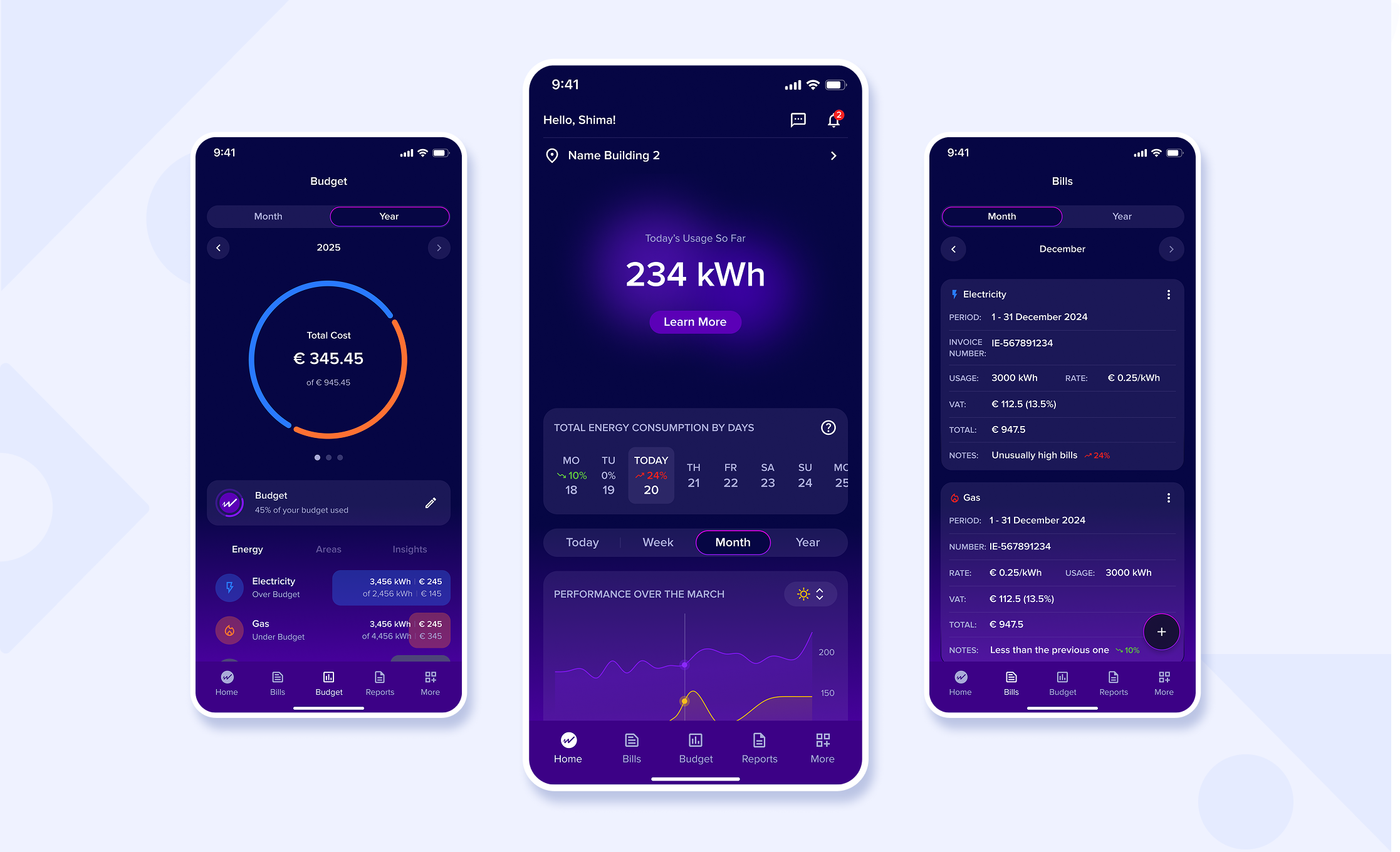
Watt Footprint is an Irish energy management company that helps businesses understand and reduce electricity, gas, carbon, solar, water, and energy spending. Its web SaaS brings monitoring data, utility bills, budgets, forecasts, alerts, and reporting into one customer-facing platform.
The next step was to make the most important workflows available away from a desk. The mobile application gives customers and operational teams a focused companion for checking performance, reviewing bills, managing budgets, and acting on energy information throughout the day.
Business Challenges
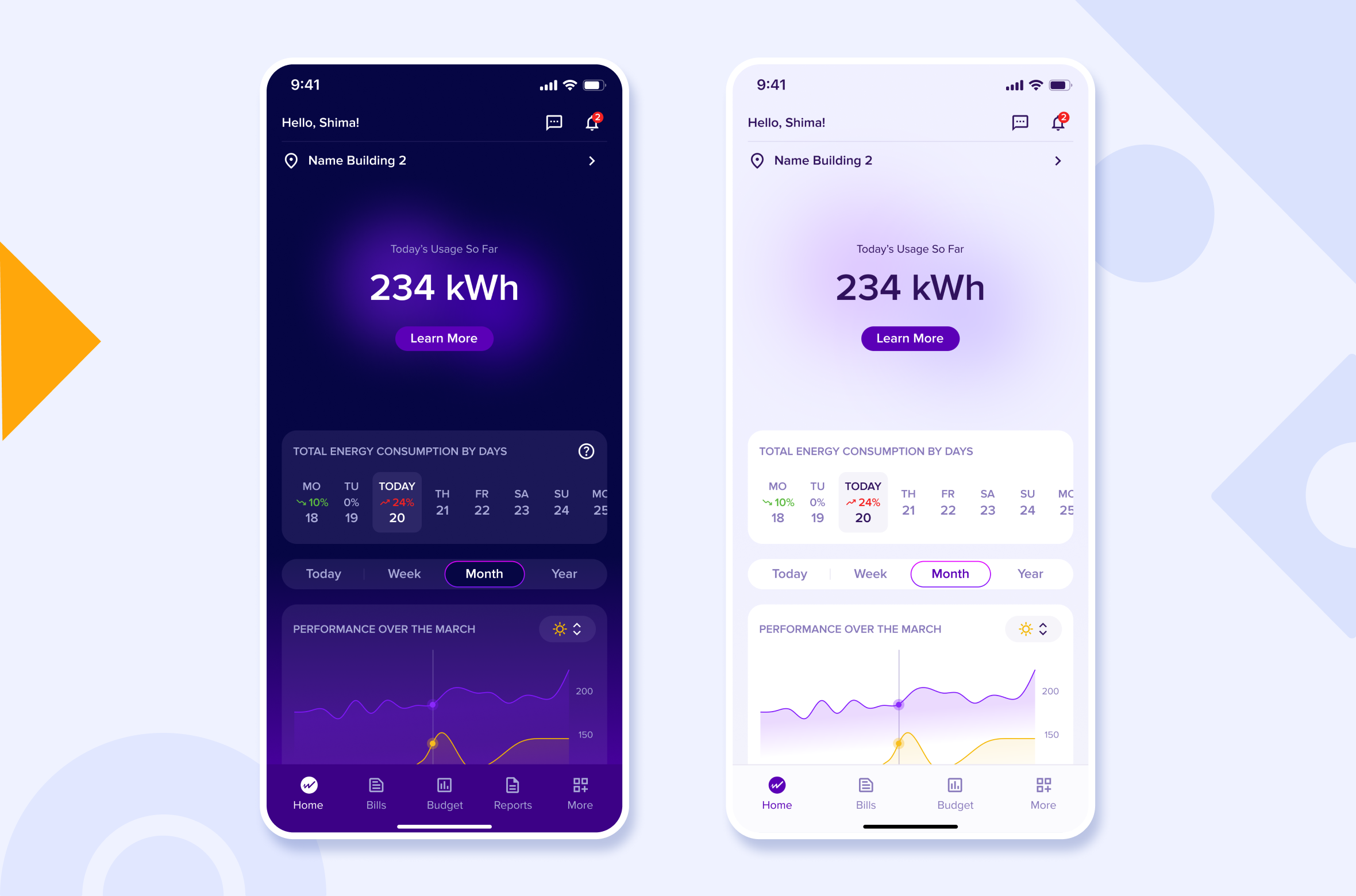
The web platform already handled detailed analytics and multi-location energy workflows. Watt Footprint needed a mobile experience that complemented that product rather than compressing desktop screens into a smaller viewport.
The application needed to:
- present dense energy, cost, and carbon data clearly on mobile screens
- support iOS and Android without maintaining two separate products
- keep navigation familiar across locations, areas, sensors, bills, and reports
- make budgets and performance trends understandable at a glance
- notify users about important changes and support quick follow-up
- remain reliable across device sizes, themes, and changing network conditions
Store requirements, physical-device behavior, document viewing, and platform-specific interactions also had to be addressed before the app could become a dependable part of the product.
Solution
Flatlogic designed and developed a cross-platform application with React Native, connected to the existing Watt Footprint platform and its established business logic. A shared mobile codebase made it possible to deliver consistent functionality for iOS and Android while still handling platform-specific release and usability requirements.
The mobile product includes:
- secure account access with mobile-friendly sign-in flows
- location-based dashboards for current usage and key trends
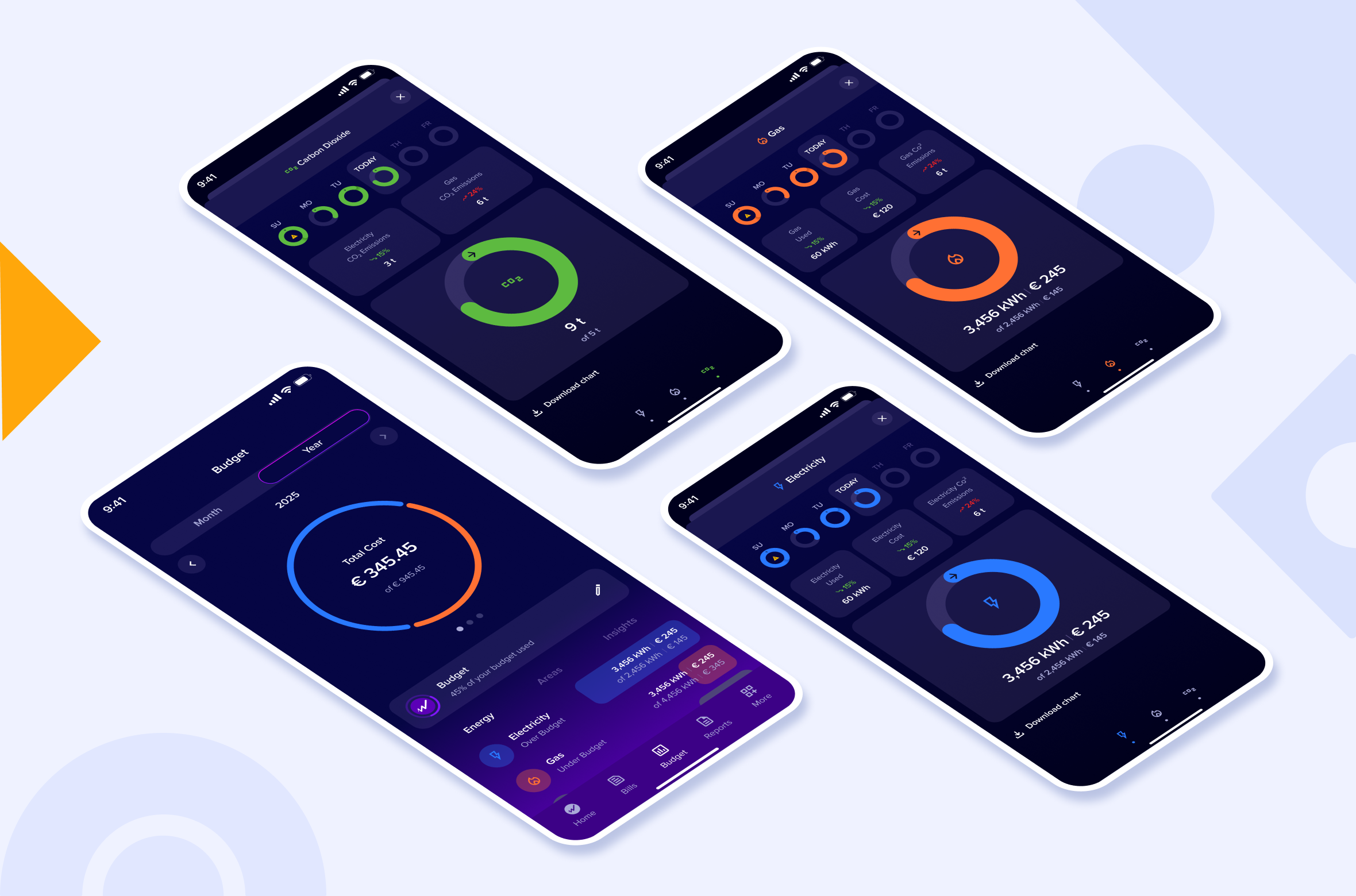
- electricity, gas, carbon, solar, and water performance views
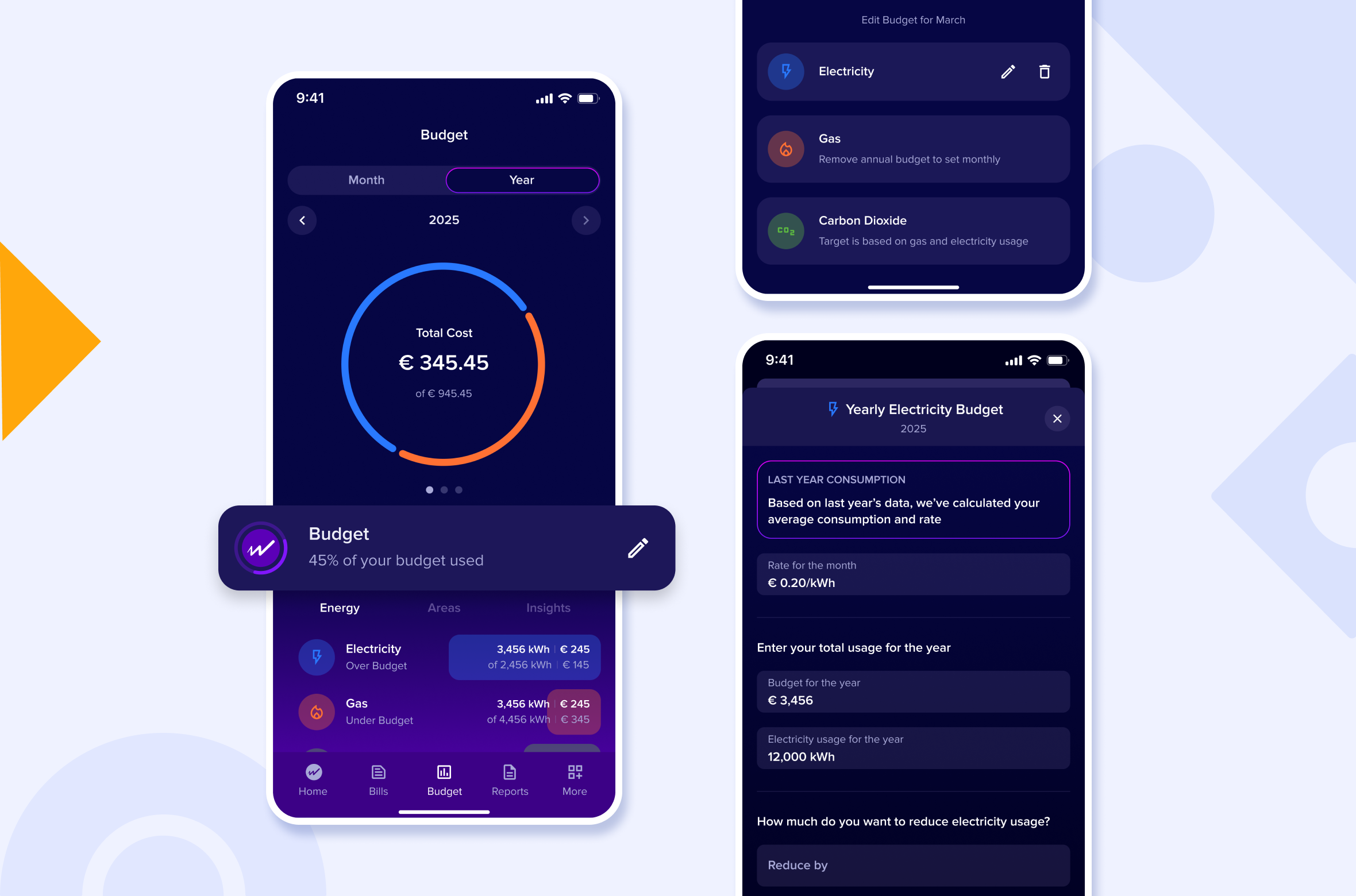
- monthly and yearly budgets with editable reduction targets
- utility bill history and supporting document access
- reports, comparisons, and mobile-optimized charts
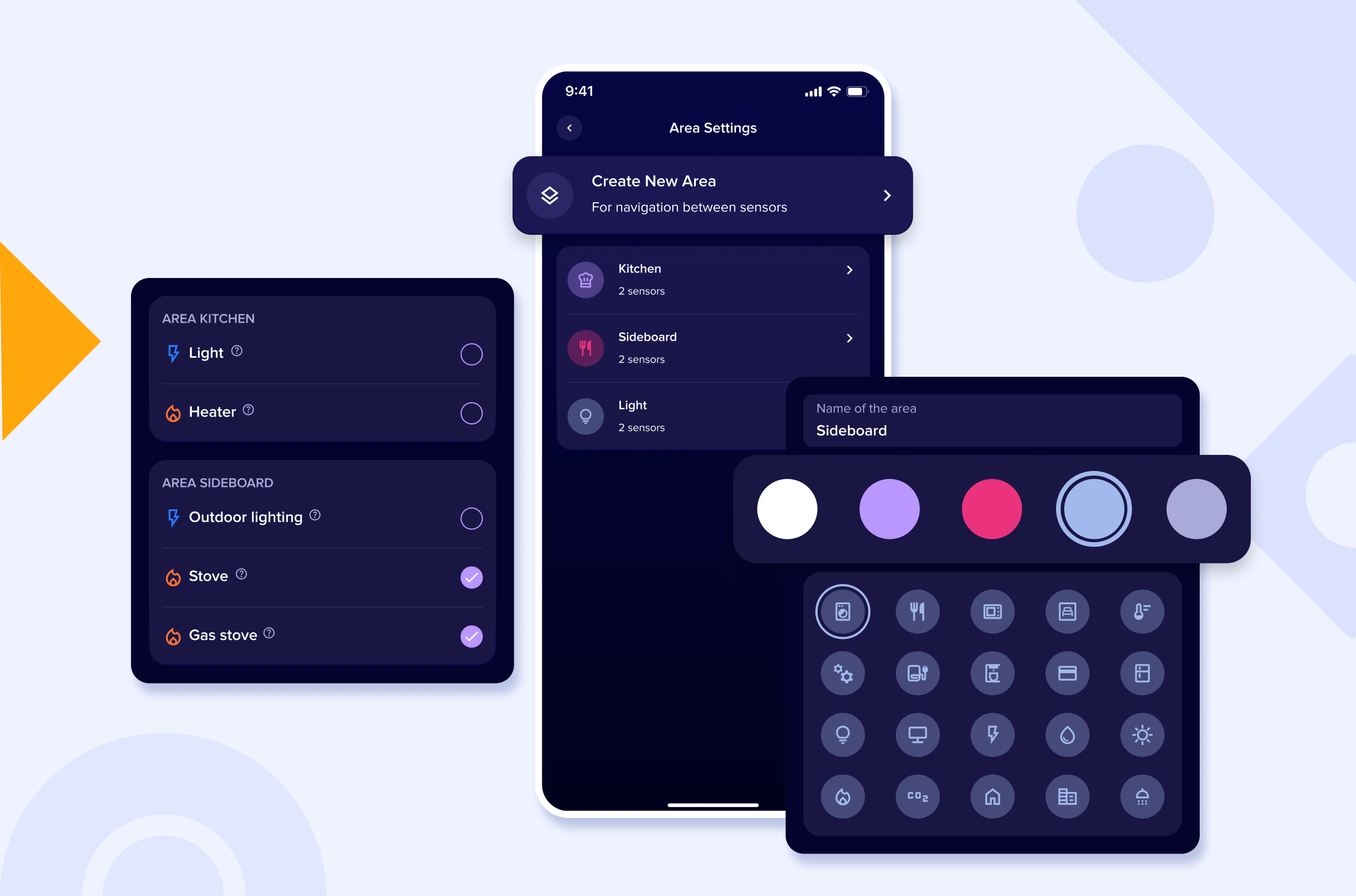
- area and sensor organization for monitored equipment
- push notifications and in-app updates for timely follow-up
- light and dark themes designed for different working conditions
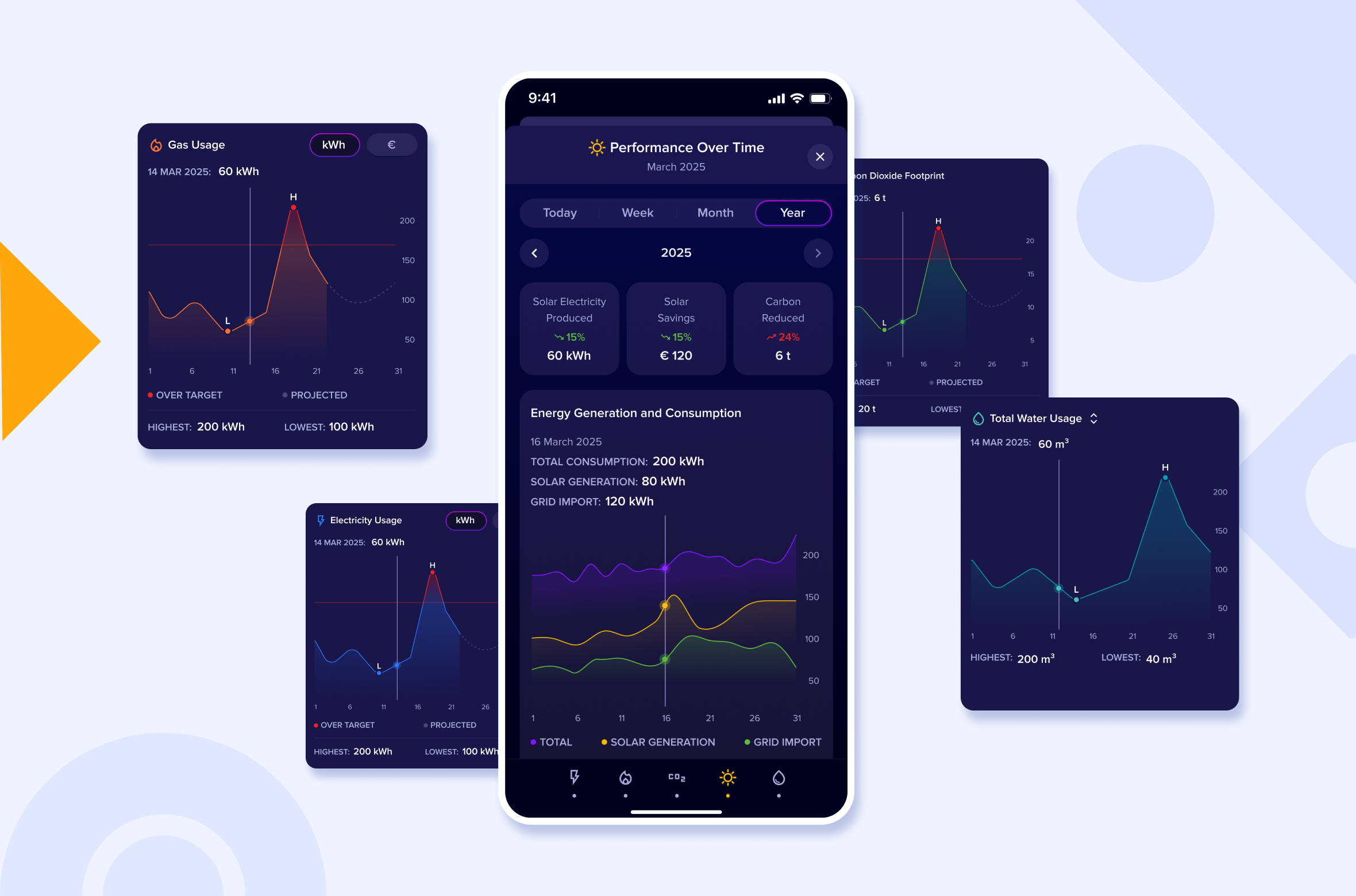
The team redesigned complex charts and interactions specifically for touch screens instead of reusing desktop layouts. Users can move from a portfolio-level signal to a specific utility, period, or budget while keeping the information readable and actionable.
The app uses the same product foundation and data services as the web platform. This keeps customer information and business rules aligned across channels while allowing each interface to focus on the way it is actually used.
From Web Workflows to Store Releases
The mobile application was delivered through the same product process established for the wider Watt Footprint platform. Product decisions, design, development, QA, stakeholder review, and release preparation were handled as one continuous workflow.
This approach turned the mobile app into an actively maintained part of the Watt Footprint ecosystem rather than a one-time companion build.
Result
Watt Footprint gained a production mobile product for iOS and Android that extends its energy management service beyond the browser. Customers can review current consumption, bills, budgets, locations, and trends without waiting to return to a desktop dashboard.
The mobile application delivered:
- one consistent customer experience across web, iOS, and Android
- faster access to energy performance and budget status on the go
- mobile-first views for complex energy and cost information
- timely engagement through push notifications and alerts
- a shared React Native foundation for continued cross-platform development
- an established release process for ongoing store updates
The project shows how an established SaaS platform can expand into a focused mobile product without duplicating the entire system. Teams planning a similar extension can explore Flatlogic's business software solutions and build web and mobile experiences around one product foundation.
Requirements
Technologies