









Participate in our anonymous Starting Web App Research 2026 & Get 10 Credits🔥 It only takes 3 minutes!🚀

Legacy App Modernization Services

Our legacy app modernization services help teams improve old business software without pretending the only answer is a costly ground-up rebuild.

These legacy app modernization services focus on the parts that actually block progress: fragile architecture, undocumented behavior, outdated dependencies, poor UX, slow data flows, and release processes nobody trusts.

Most systems do not need a rewrite. They need a clear risk map and a sequence of changes that keeps production stable.

What our legacy app modernization services cover

  • Codebase audits that identify delivery blockers, brittle modules, undocumented behavior, and dependency risk.
  • Architecture, data model, and workflow documentation that makes the system understandable again.
  • Controlled migration work across frontend, backend, and storage when the current stack is genuinely holding the product back.
  • Performance, schema, and integration improvements when the issue is operational bottlenecks rather than the entire architecture.

How we reduce modernization risk

  • We replace only the parts that create measurable risk or block product progress, not everything that looks old.
  • The team ships improvements in slices so users and stakeholders can validate progress without betting the whole system on one migration date.
  • Legacy app modernization services work best when documentation, delivery, and stabilization happen together instead of in isolated handoffs.
Legacy UX audit and redesign

Audit the user experience before redesigning it

Older products often survive because users have learned their quirks, not because the interface is good. We review the workflow, identify where the UX causes rework or confusion, and modernize the experience without throwing away useful domain behavior.
Architecture documentation

Document the architecture before changing it

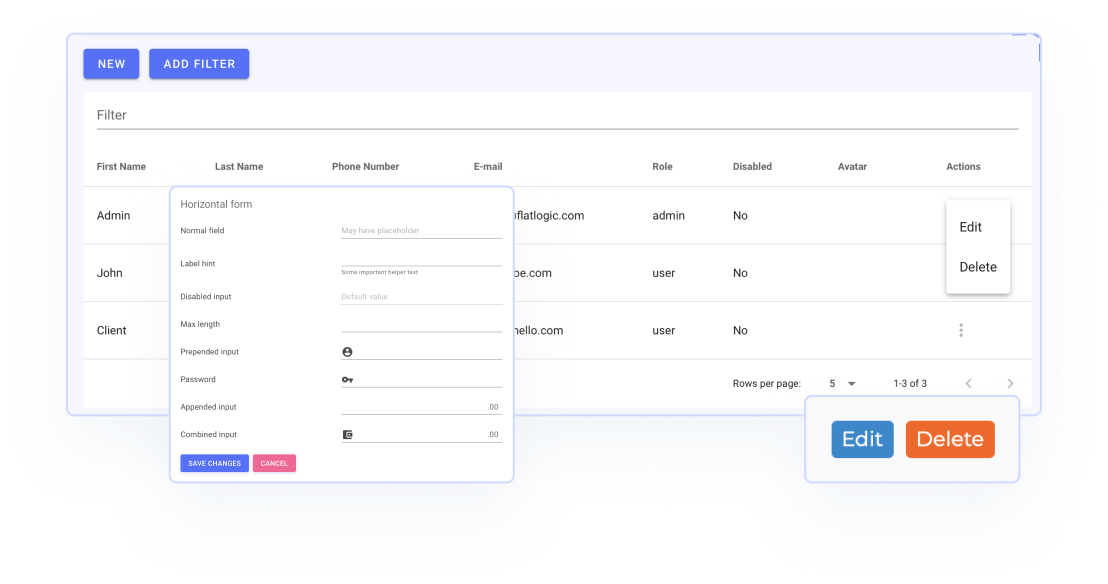
A surprising amount of legacy risk is documentation debt. We map the modules, data flow, and business rules so modernization decisions are grounded in evidence instead of folklore.

This documentation frequently becomes the first real onboarding artifact the team has had in years.

Controlled migration

Move the risky parts in controlled slices

Frontend migration, backend extraction, or platform changes should happen only where they unlock real product movement. We do not modernize for the sake of trend alignment.

The point of legacy app modernization services is to regain delivery speed without detonating a live system.

Dependency upgrades

Upgrade dependencies before they turn into outages

Outdated libraries usually announce their cost late: security issues, broken build chains, unsupported components, or engineers refusing to touch the code. We prioritize dependency work where the risk is compounding fastest.

Database optimization

Fix the data model and query bottlenecks

Some legacy problems are not framework problems at all. They are schema, indexing, query, and data-flow problems that slowly choke delivery and performance. We address those directly when they are the actual constraint.

Prototype the future state

Prototype the future state before committing to a full move

A fast prototype is often the clearest way to test whether a modernization direction is worth funding. We use prototypes to validate workflows, architecture assumptions, and the target shape of the product before the expensive work begins.

How our legacy app modernization services run

Modernization succeeds when the team understands the current system first, then changes it in controlled, reversible steps.

  • Audit the current system

    We map architecture, dependencies, data bottlenecks, release risk, and the parts of the codebase that block change.

  • Define the modernization path

    The team chooses what should be stabilized, rewritten, re-platformed, or simply documented so effort goes to the real constraints.

  • Ship the first safe improvements

    We start with visible wins: failing dependencies, risky queries, missing documentation, brittle modules, or a controlled UX update.

  • Move larger slices deliberately

    Frontend migration, backend extraction, or data model work happens in controlled increments so the product stays usable during change.

  • Keep the system improving

    Legacy app modernization services only matter if the new baseline holds. We continue with structured upgrades, cleanup, and release support.

Trusted by teams maintaining business-critical systems

Flatlogic works with companies that cannot afford downtime, delivery paralysis, or another failed rewrite.

Clients value the clarity as much as the code

Modernization work is stressful when nobody can explain the plan. We keep that part explicit.

Flatlogic's work has met expectations. The team's work was clean and aesthetically pleasing, and the user interface is very intuitive.

Lee Mora

Director of Engineering, Software Solution Company

They delivered a high-quality platform and the feedback has been overwhelmingly positive. Flatlogic exceeded expectations and kept the project on track.

Lee Decker

Founder, Hubsoft

A flexible team, they're able to scale up and down and even swap out members seamlessly.

Ahmed Saimoon

President, Software & Services Company

The team delivers excellent results and responds quickly to client requests. They are communicative and professional.

David Tran

CEO, Optelos

Unlike many other firms, Flatlogic does high-quality work at a great price and turns general concepts into functional solutions.

Founder, QodesyQ Technologies

Frequently Asked Questions

Need a second opinion on whether the product needs stabilization, migration, or both?

Contact us

Need legacy app modernization services for a product that is slowing the team down?

Send the stack, rough architecture, and the part of the system everyone is afraid to touch. We can help define the least risky path forward.