


TL;DR
- Prompt-to-app turns plain-English prompts into usable apps: screens, data models, logic, roles, integrations, and often hosting.
- The article ranks tools for startups/SMBs by app completeness, workflow fit, iteration ease, code control, and MVP-to-production path.
- Flatlogic Generator is positioned for full-stack business apps with source-code ownership; Replit is the flexible all-in-one pick.
- A common founder mistake: optimizing for impressive first output over long-term viability, structure, and ownership.
- Best results come from clear requirements and tools that can handle the “messy middle” of real product evolution.
Fact Box
- The article lists 10+ prompt-to-app tools for 2026, including Flatlogic, Replit, Firebase Studio, Bubble, and Retool.
- Flatlogic Generator is described as generating full-stack apps with frontend, backend, and database already wired together.
- Firebase Studio is described as being in Preview, which the article says impacts reliability and long-term confidence.
- The article says some tools can generate a sleek interface or working prototype in 60–90 seconds.
- It warns that most tools look great in the first five minutes, but far fewer hold up after five weeks.
What if building a real app no longer started with code, but with a sentence, and the only limit was how clearly you could describe your idea?
- What is the best prompt-to-app tool right now?
- Can I actually build a production-ready app with AI?
- Which platform won’t trap me later?
- How do I choose between no-code, AI builders, and real code?
As Paul Graham once said, The best way to get startup ideas is not to think of ideas, but to look for problems. The same is now true for building software: the real challenge is no longer writing code, it’s choosing the right way to turn problems into working products.
This problem is not theoretical. Studies from organizations like McKinsey & Company and Stripe have repeatedly shown that engineering time is disproportionately spent on repetitive foundational work, internal tools, CRUD interfaces, integrations, and infrastructure, rather than core product differentiation. For startups and SMBs, this creates a critical bottleneck: speed to execution. The longer it takes to build, the higher the cost, and the greater the risk of missing the market window. Prompt-to-app tools exist precisely to compress that gap.
In this article, you’ll learn what prompt-to-app really means in 2026, how these tools differ beneath the surface, which platforms are best suited for real business use cases (not just demos), and how to choose a tool that supports not only your first version but the next stage of your company as well.
What Does Prompt-To-App Actually Mean?
Prompt-to-app is the evolution of no-code, low-code, and AI coding assistants into one practical workflow. You describe an app in plain English, sometimes with screenshots, docs, or data, and the system generates a usable application skeleton or full product: pages, tables, forms, logic, roles, integrations, and often hosting too. The better the platform, the less time you spend fighting generated output and the more time you spend shaping a product that matches your business.
The strongest prompt-to-app tools in 2026 usually combine four layers. First, they convert intent into structure: entities, screens, flows, or components. Second, they generate a working app, not just code fragments. Third, they let you iterate through chat, visual editing, or both. Fourth, they give you some credible path to deployment, extension, and scaling. If a tool misses one of those layers, it may still be useful, but it is probably not a full prompt-to-app platform in the way most startups and SMBs need. 
How We Ranked the Tools
This is an editorial ranking for startups and SMBs, not a universal leaderboard. We weighted the tools based on business usefulness, not social media buzz. The biggest factors were: how complete the generated app is, whether the product can support real business workflows, how much control you keep after generation, how easy it is to iterate, and how believable the path is from MVP to production. That is why tools designed for full-stack business applications score differently here than tools optimized mainly for demos, design experiments, or quick front-end builds.
Top 10+ Prompt-To-App Tools In 2026
Not all prompt-to-app tools are built for the same job, and that’s exactly where most founders go wrong. Some platforms optimize for speed and visual output, others for internal tools, and only a few are designed for real, scalable business software. This list focuses on tools that go beyond demos and help you build products that can survive actual usage: with data models, user roles, backend logic, and an iteration path. Below, each tool is broken down not just by what it can do, but by who it’s really for, and where it may fall short.
Flatlogic Generator
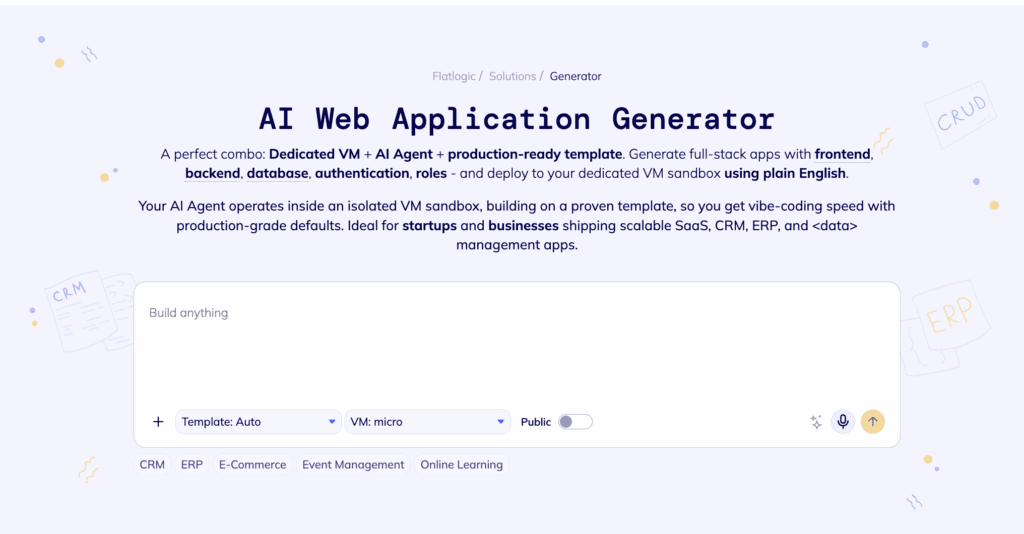
Flatlogic Generator is built for one specific outcome: generating real business software, not prototypes. It creates full-stack applications with frontend, backend, and database already wired together, which immediately removes a major chunk of engineering overhead. The platform emphasizes code ownership, meaning you are not locked into a proprietary runtime and can extend the app freely. It is particularly strong in generating structured applications like CRMs, admin panels, dashboards, and internal tools. Instead of focusing on visual magic, it focuses on operational completeness. That makes it unusually aligned with how startups and SMBs actually build products.
Target audience
Startups and SMBs building SaaS products, internal systems, or business workflows with future customization in mind.
Key features
- Full-stack app generation (frontend + backend + database)
- GitHub export and full source-code ownership
- Built-in auth, roles, and CRUD generation
- Prebuilt components (dashboards, charts, admin panels)
- Scalable architecture for further development
Pitfalls
- Less focused on instant visual “wow” compared to UI-first tools
- Requires some technical understanding to fully leverage the codebase
Pricing
Paid plans with project-based pricing; no fully free production tier.
Replit Agent
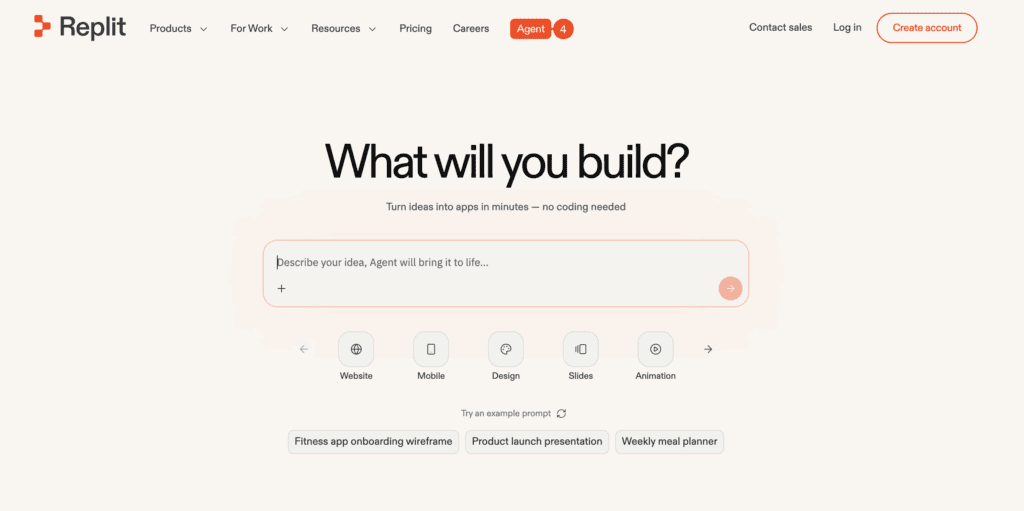
Replit Agent is one of the most complete general-purpose prompt-to-app tools available today. It allows users to build applications conversationally while automatically handling infrastructure like databases, authentication, and deployment. The platform acts as an all-in-one environment where you can generate, edit, and ship code without leaving the workspace. Its flexibility makes it suitable for a wide range of app types, from prototypes to production-ready tools. Unlike strict no-code builders, it does not force a visual paradigm. That freedom makes it powerful, but also slightly less guided.
Target audience
Founders, indie hackers, and developers who want flexibility and an all-in-one AI development environment.
Key features
- Chat-based full app generation
- Built-in hosting, database, and auth
- Secrets management and environment setup
- Custom domain support
- Integrated coding environment
Pitfalls
- Less structured for business apps out of the box
- Requires more decision-making from the user
Pricing
Freemium with paid tiers for advanced AI usage and hosting.
Firebase Studio
Firebase Studio represents Google’s push into prompt-driven development environments. It enables users to generate full-stack applications, including APIs, frontends, and mobile experiences, within a cloud-based ecosystem. The platform integrates deeply with Firebase services like Firestore and Authentication, making it particularly attractive for teams already in that ecosystem. It also supports multimodal inputs, allowing prompts beyond plain text. However, the product is still in Preview, which affects reliability and long-term confidence. Despite that, its direction is strategically important.
Target audience
Startups already using Firebase or planning to build within Google’s ecosystem.
Key features
- Full-stack AI app generation
- Native Firebase integration (Firestore, Auth)
- Multimodal prompting
- Cloud-based development environment
Pitfalls
- Still in Preview (stability concerns)
- Ecosystem lock-in
Pricing
Usage-based Firebase pricing; Studio features evolving.
Bubble AI App Generator
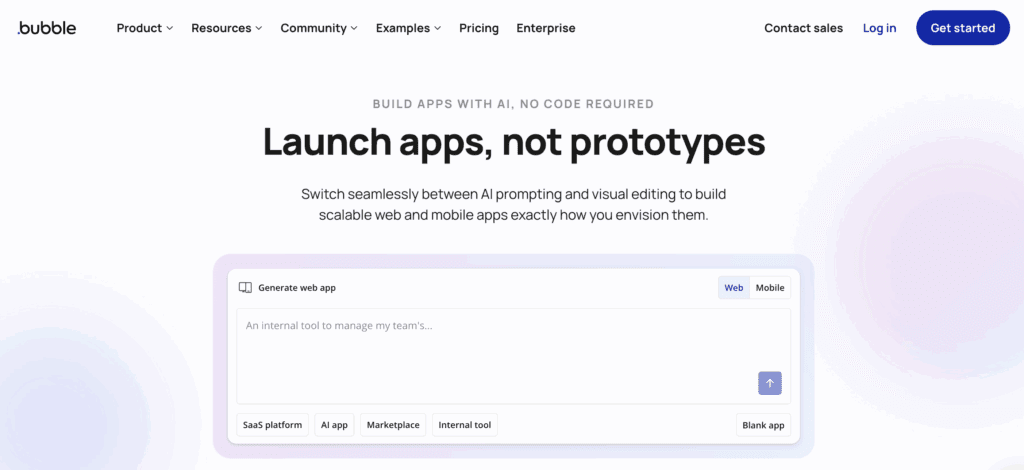
Bubble combines its mature no-code platform with AI-powered app generation. It can create full applications from prompts and then allows users to refine them visually without writing code. The platform includes built-in data handling, logic workflows, and deployment infrastructure. It is particularly strong for non-technical founders who want control without coding. However, applications remain within the Bubble ecosystem, which limits portability. For many teams, that tradeoff is acceptable.
Target audience
Non-technical founders and teams building web apps visually.
Key features
- Prompt-to-app generation with visual editor
- Built-in database and workflows
- Hosting and deployment included
- Security and compliance features
Pitfalls
- Limited code portability
- Scaling can become complex
Pricing
Freemium with tiered paid plans based on app capacity.
v0 by Vercel
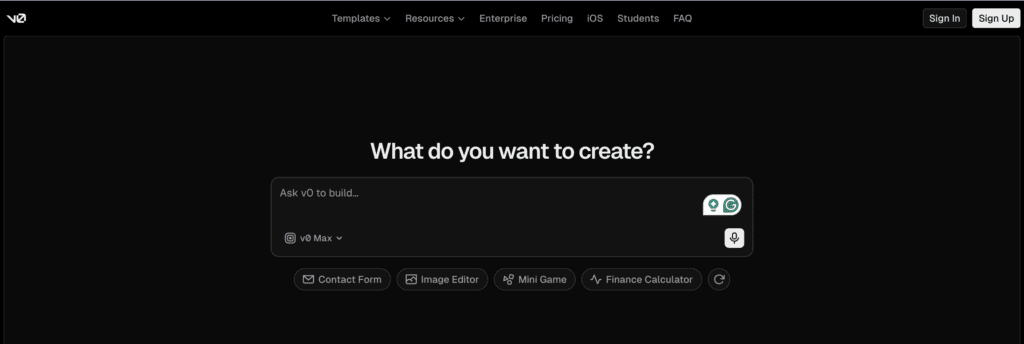
v0 is an AI-first tool focused heavily on frontend and developer workflows. It generates application interfaces and can push code directly to GitHub, integrate APIs, and deploy via Vercel. The platform operates in an “agentic” mode, meaning it can plan and execute multiple steps during generation. It is particularly strong for teams that care about UI quality and modern web stacks. However, it is less opinionated about backend structure. This makes it ideal for developers, but less turnkey for business systems.
Target audience
Frontend-focused teams and developers building modern web apps.
Key features
- UI and app generation from prompts
- GitHub integration
- Vercel deployment pipeline
- API and tool integrations
Pitfalls
- Backend logic requires more manual setup
- Less structured for business workflows
Pricing
Free tier with usage-based or premium plans.
Lovable
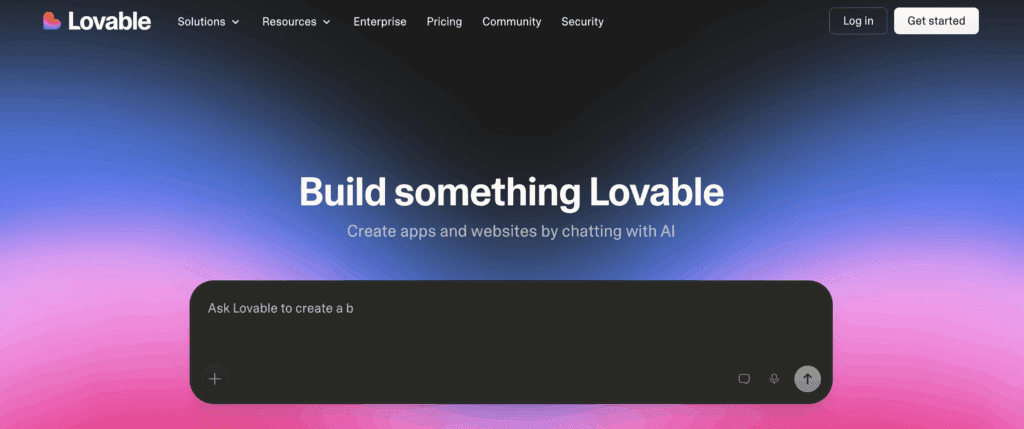
Lovable focuses on simplicity and accessibility in AI app creation. It allows users to generate apps and websites through chat and refine them interactively in real time. The platform is designed to feel lightweight and approachable, reducing the friction of starting a project. It is particularly effective for ideation and rapid prototyping. However, it is less optimized for complex backend-heavy systems. As a result, it works best at the early stages.
Target audience
Founders, marketers, and designers exploring ideas quickly.
Key features
- Real-time AI app generation
- Conversational interface
- Fast iteration and prototyping
- Simple deployment
Pitfalls
- Limited depth for complex applications
- Not ideal for structured business systems
Pricing
Freemium with paid upgrades.
Bolt.new
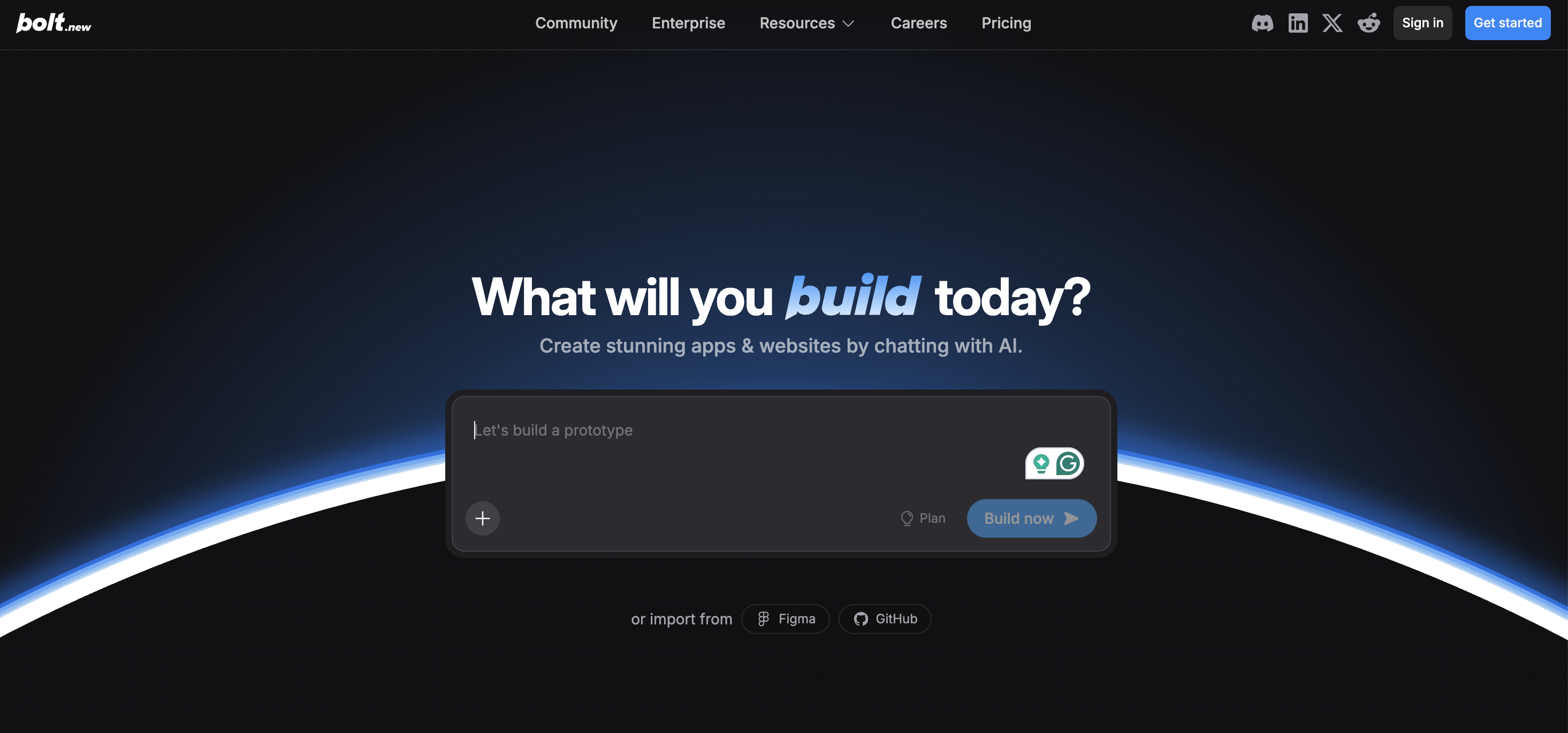
Bolt enables users to generate and run full-stack web apps directly in the browser. Powered by WebContainers, it eliminates the need for local setup and provides instant execution. This creates an extremely fast feedback loop, which is valuable for rapid development. The platform is developer-friendly and efficient for quick builds. However, it is not specifically tailored for business application scaffolding. Its strength lies in speed rather than structure.
Target audience
Developers and builders who want fast, browser-based development.
Key features
- In-browser full-stack execution
- Instant feedback loop
- No local environment setup
- AI-assisted generation
Pitfalls
- Limited specialization for business apps
- Requires technical understanding
Pricing
Free and paid tiers depending on usage.
FlutterFlow AI
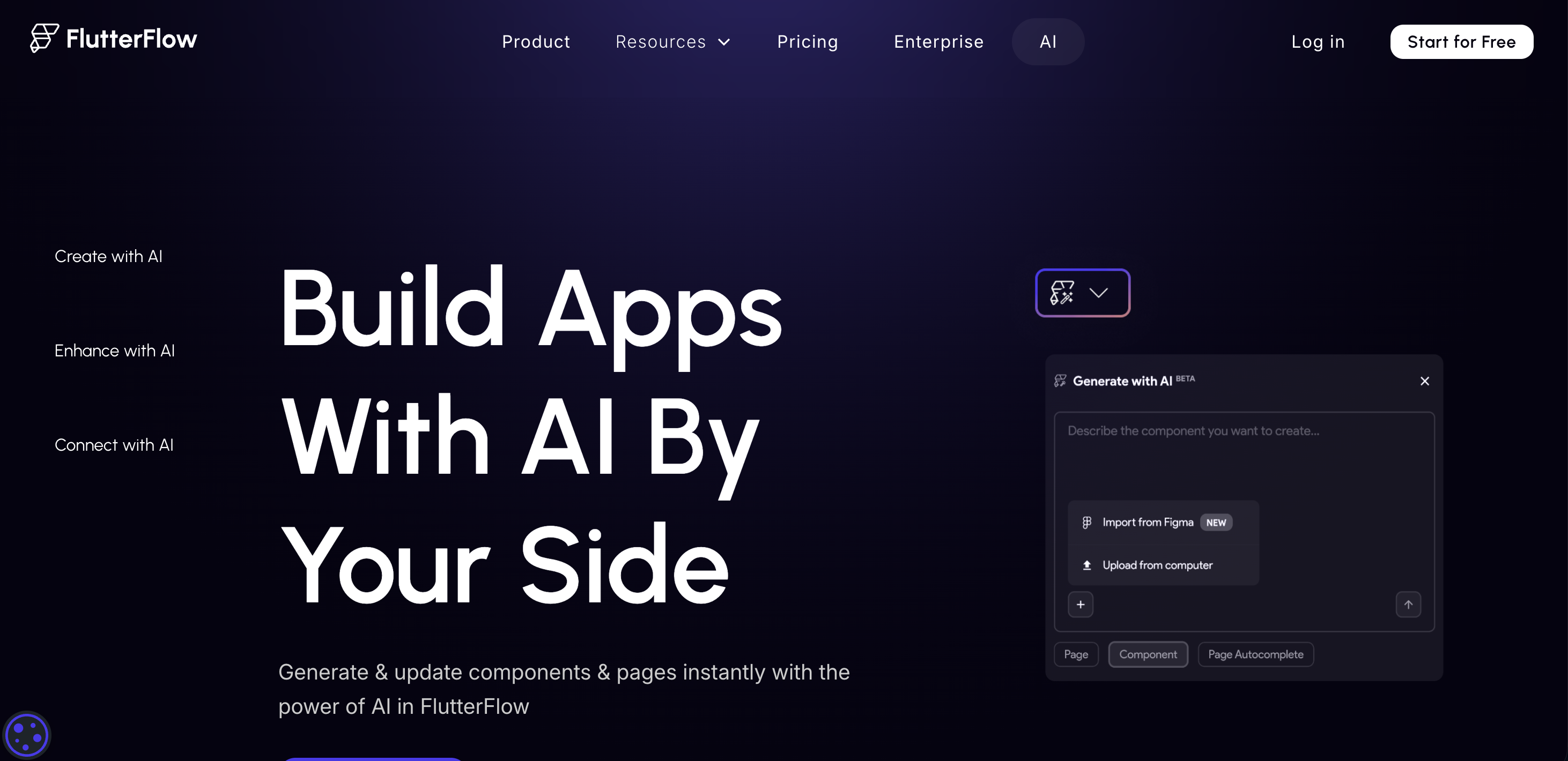
FlutterFlow AI extends a mobile-first platform with AI-assisted generation capabilities. It focuses on building cross-platform applications efficiently, especially for mobile environments. Users can generate components and pages, then refine them visually. It offers a balance between no-code convenience and development flexibility. This makes it appealing for teams targeting mobile-first products. For web-heavy business tools, however, it is less dominant.
Target audience
Startups building mobile or cross-platform apps.
Key features
- AI-assisted UI and app generation
- Cross-platform (iOS, Android, web)
- Visual builder with customization
- Firebase integration
Pitfalls
- Not optimized for complex web business systems
- Learning curve for advanced customization
Pricing
Freemium with subscription tiers.
Glide
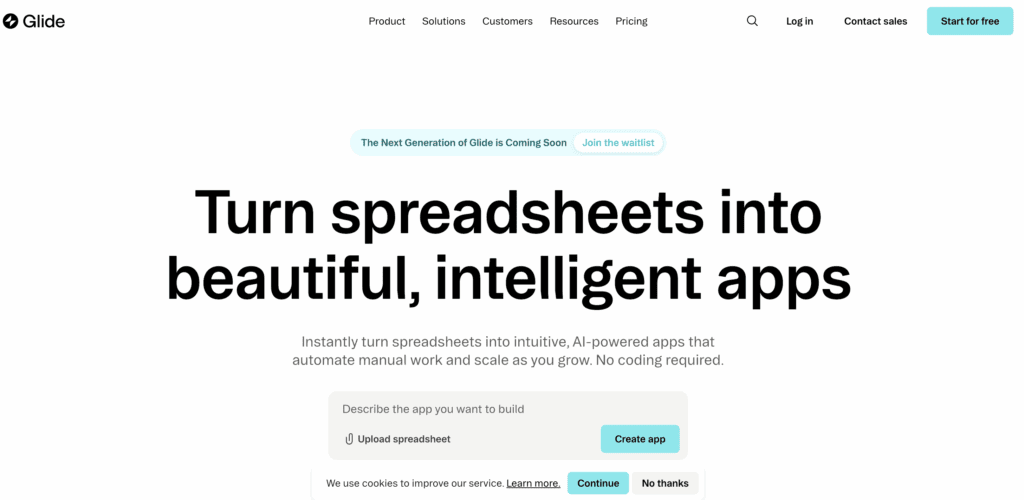
Glide is designed for turning operational workflows into working applications quickly. It excels at building internal tools, dashboards, and process-driven apps without long development cycles. Its AI features help generate interfaces and derive insights from data. Glide’s strength is practicality: it solves real business problems efficiently. It is not designed for deep customization or developer-heavy use cases. That focus makes it highly effective for operations teams.
Target audience
SMBs and teams are replacing spreadsheets with apps.
Key features
- Fast internal tool creation
- AI-powered data insights
- Simple UI generation
- Workflow automation
Pitfalls
- Limited flexibility for custom development
- Less suitable for complex SaaS products
Pricing
Subscription-based pricing with team plans.
Softr
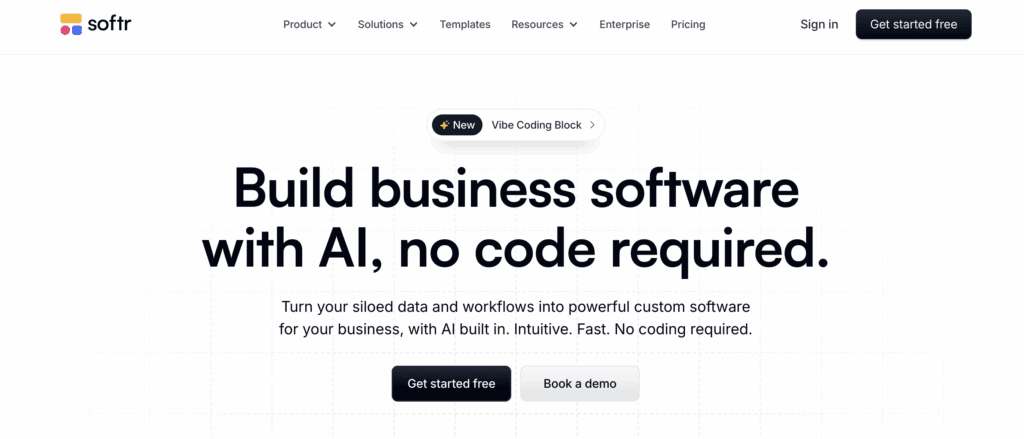
Softr is a straightforward AI-powered business app builder focused on usability. It allows users to generate apps from prompts and customize them using prebuilt blocks. The platform supports common business use cases like client portals and directories. It is designed for speed and accessibility rather than deep technical control. This makes it especially useful for non-technical teams. However, it is less powerful for complex systems.
Target audience
Non-technical startups and SMBs.
Key features
- Prompt-based app generation
- Prebuilt blocks and templates
- User authentication and roles
- Business app templates
Pitfalls
- Limited scalability
- Less flexibility for custom logic
Pricing
Freemium with paid tiers.
Retool AI
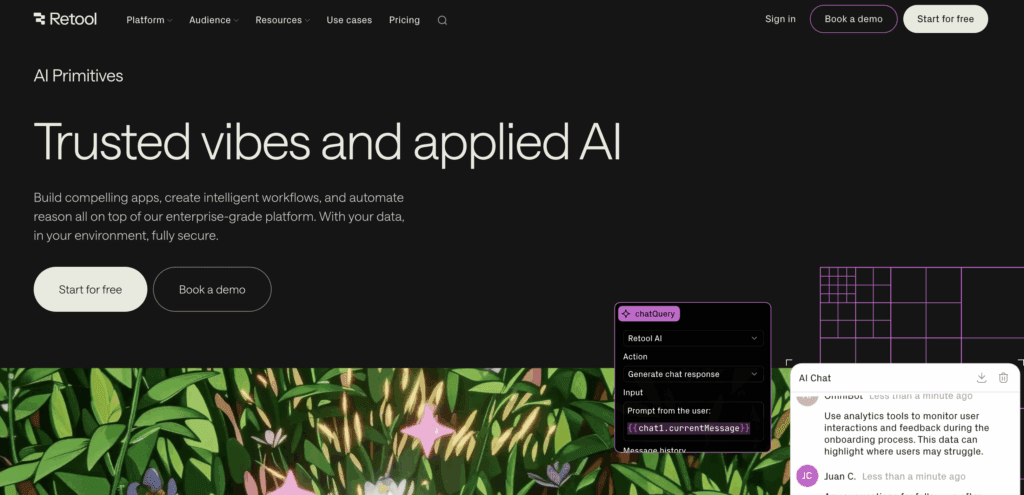
Retool AI is focused on generating internal tools connected to real business data. It emphasizes production readiness, including permissions, SSO, and data governance. The platform is highly effective for building tools used by internal teams. It integrates deeply with existing systems, which makes it powerful in operational contexts. However, it is not designed for general-purpose product building. Its specialization is both its strength and its limitation.
Target audience
Companies are building internal tools and data-driven applications.
Key features
- AI-generated internal tools
- Data integration with existing systems
- RBAC and SSO support
- Context-aware editing
Pitfalls
- Not ideal for customer-facing products
- Requires existing data infrastructure
Pricing
Enterprise-oriented pricing with usage tiers.
Adalo
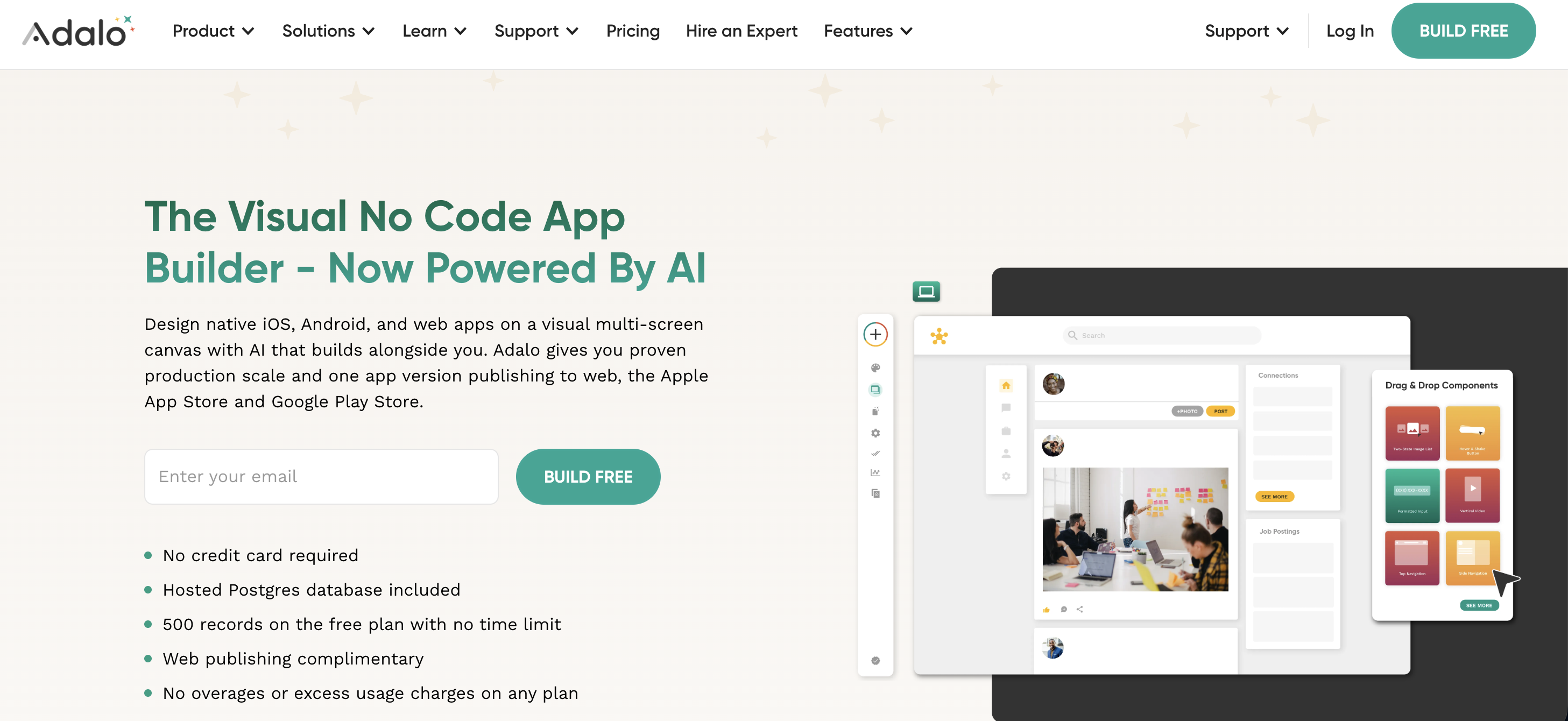
Adalo focuses on building mobile and web apps through a visual interface with AI assistance. It allows users to publish apps to web, iOS, and Android from a single project. The platform includes a hosted database and component-based design system. It is particularly useful for launching simple mobile apps quickly. However, it is not optimized for complex business software. Its strength lies in accessibility and speed.
Target audience
Founders launching mobile-first or lightweight apps.
Key features
- Cross-platform publishing
- Visual app builder
- Built-in database
- Component-based UI
Pitfalls
- Limited scalability for complex systems
- Less control over architecture
Pricing
Subscription-based plans with publishing features.
So Which Prompt-to-App Tool Should You Choose?
If you are building a real SaaS product, admin panel, CRM, ERP-like workflow, or internal business system that may need custom development later, start with Flatlogic Generator. It is the most aligned with the ugly realities of business software: structure, backend, database, roles, ownership, and future customization. It is not trying to be merely delightful. It is trying to be useful where usefulness is usually expensive.
If you want a broad, flexible AI builder with strong all-in-one momentum, Replit is probably the best general-purpose choice today. If you live in Google’s ecosystem, Firebase Studio is the most strategically interesting bet, though still early. If you want visual no-code power with strong staying power, Bubble remains hard to ignore. If your main priority is shipping polished interfaces fast, v0, Lovable, and Bolt are the most exciting trio. If your world is business operations, Glide, Softr, and Retool may actually save you more time than the flashier developer-facing tools.
The Biggest Mistake Founders Make With Prompt-To-App
The biggest mistake founders make with prompt-to-app tools is confusing impressive output with long-term viability. A tool that generates a sleek interface or working prototype in 60-90 seconds can feel like a breakthrough, but that first output is the easiest part of the product lifecycle. What actually determines success is everything that comes after: changing requirements, messy data, user roles, edge cases, integrations, and ongoing iteration. Most tools look great in the first five minutes. Far fewer hold up after five weeks.
This mistake usually shows up as over-optimizing for speed instead of structure. Founders pick the tool that gets them “something working” the fastest, without asking whether that system can support real usage. Can it handle authentication properly? Can you define roles and permissions without hacks? Can the data model evolve without breaking everything? Can you integrate external services without fighting the platform? If the answer to those questions is unclear, the speed you gained upfront often turns into friction later.
Another version of the same mistake is ignoring ownership. Some platforms make it easy to build, but hard to leave. That may not matter at the MVP stage, but it becomes critical once the product starts growing. If developers need to extend the system, migrate it, or optimize performance, a lack of access to the underlying code or architecture can slow everything down. What felt like acceleration early on becomes a constraint.
There is also a timing problem. Many founders choose tools based on who is building the product today, often themselves, rather than who will maintain and extend it later. A solo-friendly tool may not be team-friendly. A visual builder that works for iteration may not work for scaling. The right question is not just “Can I build this quickly?” but “Can this evolve with my company over the next 6-12 months without forcing a rebuild?”
The reality is simple: prompt-to-app tools are leverage, not magic. They compress the early stages of development, but they do not eliminate the need for product thinking, system design, or future planning. The best founders treat the first generated version as a starting point, not a finished product, and choose tools based on how well they handle the messy middle, not the polished beginning.
Final Verdict
Prompt-to-app is no longer a trend. It’s an actual shift in how software gets built. It’s not perfect, it’s not magic, and it doesn’t replace product thinking, but it has clearly moved beyond the stage of generating mockups or half-working demos. In 2026, the best tools can produce real, usable applications with structure, logic, and deployment paths. That fundamentally changes the equation for startups and SMBs: building software is no longer limited only by engineering resources, but by how clearly you can define what you want to build.
That shift puts a new kind of pressure on founders. The bottleneck is no longer just execution. It’s clarity of intent. The teams that win are not the ones with access to the most tools, but the ones that can translate business problems into precise prompts, structured requirements, and iterative improvements. Prompt-to-app tools reward clarity, not just creativity.
But tool choice still matters. The difference between a platform that generates something impressive and one that supports a real product becomes obvious very quickly. If your goal is to build something that will evolve, something with users, data, workflows, and ongoing changes, you need a tool that can handle more than the first version. That means thinking about structure, ownership, and long-term flexibility from day one.
If you are building serious business software, a SaaS product, an internal system, CRM, or operational platform, Flatlogic Generator stands out as the strongest first-place choice in 2026. It is designed around the realities of business applications, not just the excitement of AI generation. More importantly, it offers something that many tools still avoid: the ability to move fast without giving up control of your codebase and future development path.
Prompt-to-app is real. The advantage now goes to those who can use it deliberately.