


TL;DR
- Replit works for prototypes, but startups often outgrow browser-first IDEs when security, DevOps, and team scale matter.
- Pick tools by stage: MVP speed (Flatlogic, Bolt.new, Lovable) vs production control (Cursor, GitHub Codespaces).
- Flatlogic Generator targets production-ready full-stack apps with backend, DB, auth, admin panels, and code ownership.
- Cursor brings AI-assisted coding into a VS Code–based workflow with Git, terminal, debugging, and extensions.
- Watch long-term costs and lock-in: usage-based AI/hosting can get expensive as teams and traffic scale.
Fact Box
- Cursor paid plans typically start around $20/month per user for professional AI usage and advanced features.
- StackBlitz uses WebContainers to run Node.js environments directly in the browser without local setup.
- GitHub Codespaces provides cloud VS Code environments connected to GitHub repos with containerized dependencies.
- Flatlogic Generator supports React, Node.js, PostgreSQL, and AWS-compatible infrastructure for generated apps.
- The article says MVP tools can help teams launch functional products in days instead of months.
Most startup founders don’t fail because of bad ideas, they fail because their tools stop scaling the moment a prototype becomes a real product. Read this article to discover which Replit alternatives can actually support production-ready applications, team collaboration, and long-term growth.
Startup founders searching for Replit alternatives usually ask the same questions:
- Which platform is best for building MVPs quickly without sacrificing scalability?
- What alternatives provide better collaboration and deployment workflows than Replit?
- Which AI-assisted coding tools are suitable for startup teams instead of solo developers?
- How can startups move from browser-based experimentation to production-grade software development?
As Martin Fowler once said, “Any fool can write code that a computer can understand. Good programmers write code that humans can understand”.
In 2026, that idea extends beyond code itself, startups also need platforms that teams can maintain, scale, secure, and operate effectively.
The rise of AI-powered development environments has dramatically changed how startups build products. Browser-based IDEs and low-code AI tools make it possible to launch applications faster than ever before. However, studies consistently show that rapid prototyping tools often introduce technical debt, infrastructure limitations, and scalability issues when products begin attracting real users. Developer productivity reports highlight the growing role of AI-assisted coding in startup workflows, whilesome researches emphasizes that engineering scalability becomes a critical bottleneck during early growth stages.
Startups frequently discover that tools optimized for demos and experimentation are not necessarily optimized for production engineering, compliance, collaboration, or DevOps maturity.
By reading this article to the end, you will learn:
- Which Replit alternatives are best suited for startup environments.
- How different platforms compare in terms of scalability, collaboration, AI assistance, and deployment.
- Which tools are ideal for MVP development versus long-term production systems.
- The hidden pitfalls founders should consider before committing to a platform.
- How to choose the right development environment depending on your startup stage and technical team size.

Why Startups Are Looking Beyond Replit
Replit became popular because it lowered the barrier to software development. Founders could open a browser, describe an idea, and instantly start coding without configuring infrastructure. For hackathons, educational projects, and lightweight prototypes, this model worked extremely well.
The problem begins when a startup evolves beyond experimentation.
Many founders discover that browser-first development environments struggle with:
- Complex backend architectures
- Enterprise-grade security requirements
- Advanced DevOps workflows
- Large team collaboration
- Stable deployment pipelines
- Performance optimization
- Vendor lock-in risks
This is why startups increasingly search for alternatives capable of supporting production-grade applications instead of just browser demos. The following platforms represent some of the strongest alternatives currently available for startups that want to move from “browser toys” to sustainable products.
Flatlogic Generator
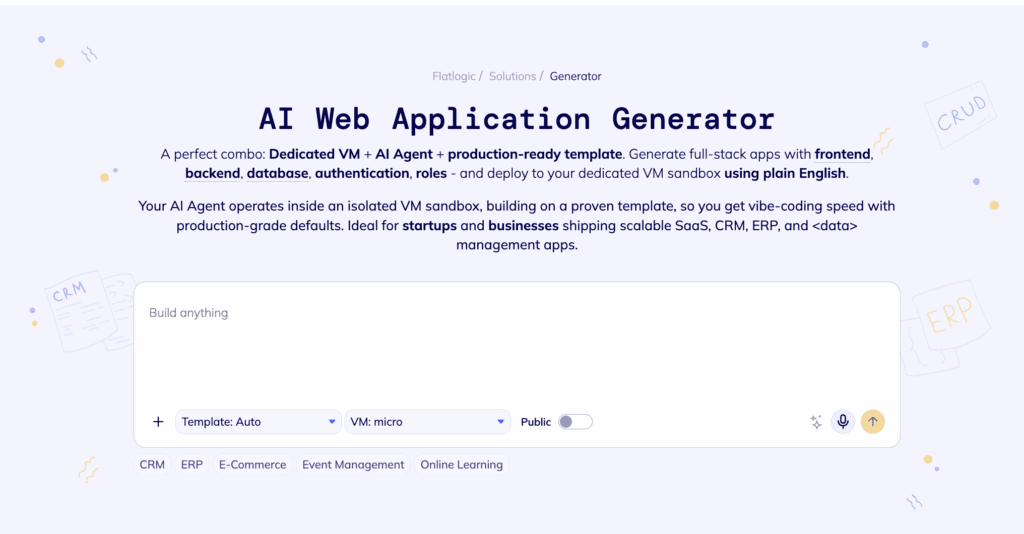
Flatlogic Generator is an AI-powered full-stack application generator designed specifically for startups and businesses that want to move from prototype to production much faster. Unlike lightweight browser IDEs focused mainly on experimentation, Flatlogic Generator creates structured, scalable applications with real backend architecture, database schemas, authentication systems, admin panels, and production-ready codebases. The platform allows founders and engineering teams to generate SaaS products, CRMs, ERP systems, internal tools, and business applications using modern frameworks such as React, Node.js, PostgreSQL, and AWS-compatible infrastructure.
One of the biggest advantages for startups is that Flatlogic Generator emphasizes maintainable architecture rather than temporary demos, helping teams avoid excessive technical debt during growth stages. Startups can significantly reduce development time while still retaining ownership of the generated source code and deployment flexibility. This makes Flatlogic Generator especially valuable for companies that need both rapid MVP delivery and long-term scalability.
Target Audience
- SaaS startups building production-ready products
- Founders needing scalable MVPs quickly
- Engineering teams accelerating internal tool development
- Businesses requiring customizable full-stack architectures
Key Features
- AI-powered full-stack application generation
- Production-ready backend and frontend architecture
- Built-in authentication and database setup
- Customizable CRUD functionality and admin panels
- Support for React, Node.js, PostgreSQL, and cloud deployment
- Ownership of generated source code
Pitfalls
- Still requires engineering oversight for highly custom products
- Advanced scalability optimizations may require manual refinement
- Teams unfamiliar with generated architectures may face onboarding learning curves
- Less suitable for extremely niche infrastructure requirements
Pricing
Flatlogic Generator offers multiple pricing tiers depending on project complexity, framework selection, and enterprise requirements. Pricing is generally positioned for startups and businesses seeking to reduce engineering costs and accelerate product delivery.
Cursor
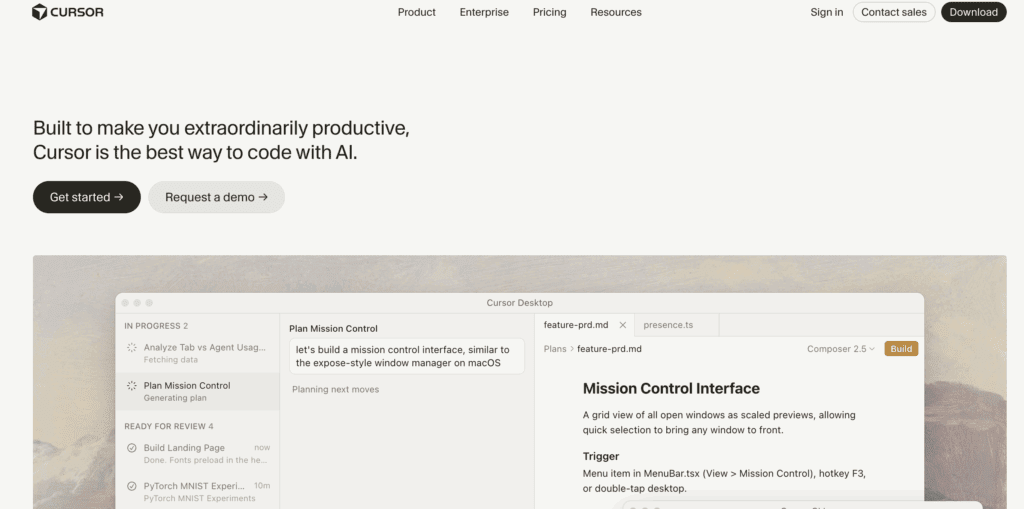
Cursor is one of the most popular AI-native coding environments currently used by startups and engineering teams. Unlike Replit, Cursor is built on top of VS Code, which immediately gives developers access to a mature ecosystem of extensions, debugging tools, terminal workflows, and Git integrations. The platform focuses heavily on AI-assisted development, allowing developers to generate code, refactor large files, explain unfamiliar codebases, and automate repetitive engineering tasks directly inside the editor. Cursor stands out because it combines the speed of AI generation with the flexibility of a full desktop development environment. This makes it especially attractive for startups that need both rapid iteration and production-level engineering workflows. Rather than replacing traditional development practices, Cursor augments them with AI-powered productivity features.
Target Audience
- Early-stage startups with technical founders
- SaaS companies scaling engineering teams
- Developers transitioning from lightweight browser IDEs
- Teams building production-grade applications
Key Features
- AI-powered code generation and editing
- Deep integration with existing codebases
- VS Code compatibility and extension ecosystem
- Context-aware AI chat and debugging
- Git integration and terminal support
- Multi-language development support
Pitfalls
- Requires stronger engineering knowledge than low-code tools
- AI suggestions may still introduce technical debt
- Local environment setup can be intimidating for non-technical founders
- Heavy AI usage may increase operational costs over time
Pricing
Cursor offers a free plan with limited AI requests. Paid plans typically start around $20/month per user for professional AI usage and advanced features.
Bolt.new
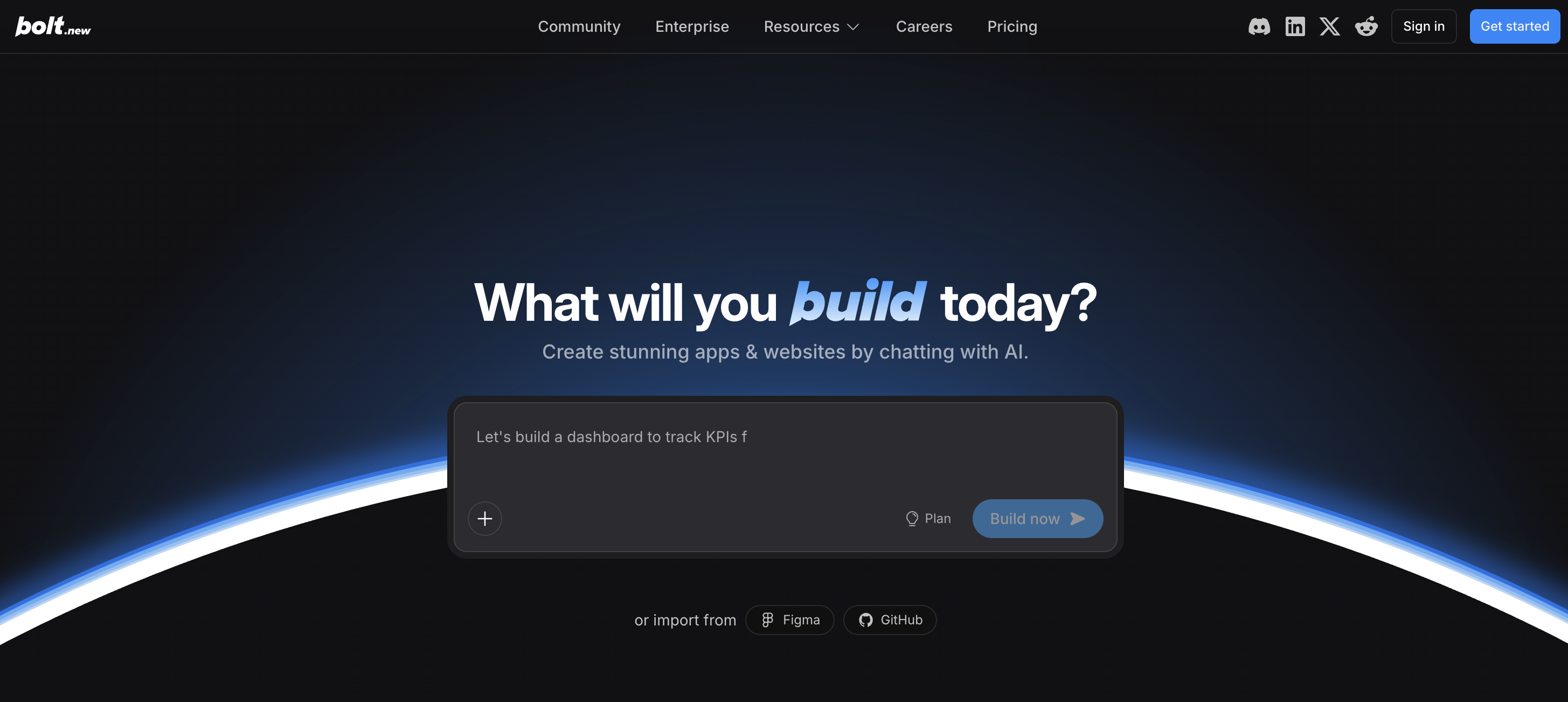
Bolt.new is gaining attention among startups because it dramatically simplifies full-stack web application generation directly from prompts. The platform allows users to describe an application in natural language and instantly receive a working frontend and backend environment. Unlike traditional browser IDEs, Bolt.new focuses heavily on rapid product iteration and deployment speed. Founders can create MVPs, landing pages, internal tools, and SaaS prototypes within hours instead of weeks. The platform integrates well with modern JavaScript ecosystems, making it attractive for startups using React, Next.js, and related frameworks. Bolt.new is particularly effective for validating ideas quickly before investing in larger engineering teams.
Target Audience
- Non-technical founders
- Startup MVP teams
- Product designers experimenting with prototypes
- Small SaaS startups validating ideas quickly
Key Features
- Prompt-based full-stack app generation
- Fast deployment workflows
- Modern frontend framework support
- Browser-based collaborative development
- Integrated hosting capabilities
- Rapid prototyping environment
Pitfalls
- Limited customization for highly complex architectures
- Generated code may require substantial refactoring later
- Scaling large applications can become difficult
- Debugging AI-generated systems may slow down teams over time
Pricing
Bolt.new typically uses usage-based pricing with free starter access and paid tiers scaling according to AI generation volume and hosting needs.
GitHub Codespaces
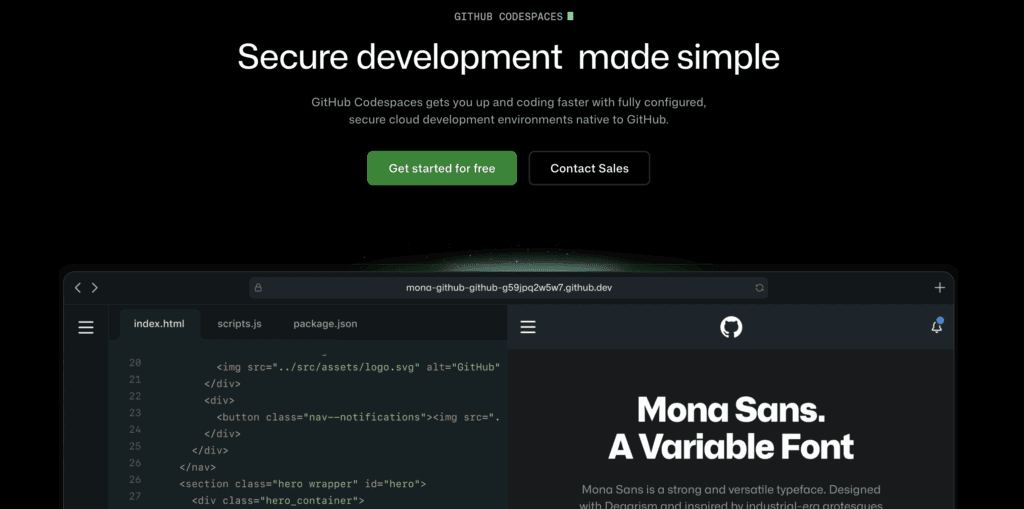
GitHub Codespaces is one of the strongest enterprise-ready alternatives to Replit for startups planning long-term growth. The platform provides fully configured cloud development environments directly connected to GitHub repositories. Unlike lightweight coding sandboxes, Codespaces enables developers to work inside consistent environments with containerized dependencies, advanced debugging, and production-oriented workflows. For startup teams, this dramatically reduces onboarding friction because every engineer can work inside the same environment configuration. Codespaces also integrates naturally with CI/CD pipelines, GitHub Actions, pull requests, and DevOps tooling. Instead of prioritizing simplicity alone, the platform prioritizes development consistency and scalability.
Target Audience
- Engineering-driven startups
- Remote software development teams
- DevOps-focused organizations
- Startups scaling from MVP to production systems
Key Features
- Cloud-based VS Code environments
- Deep GitHub integration
- Containerized development environments
- Team collaboration workflows
- Enterprise-grade security controls
- Strong CI/CD ecosystem integration
Pitfalls
- More expensive than lightweight browser IDEs
- Less beginner-friendly for non-developers
- Requires understanding of Git and development workflows
- Cloud resource costs can increase significantly for larger teams
Pricing
GitHub Codespaces pricing depends on compute usage and storage consumption. Small teams may spend relatively little, but larger engineering organizations should monitor resource usage carefully.
Lovable
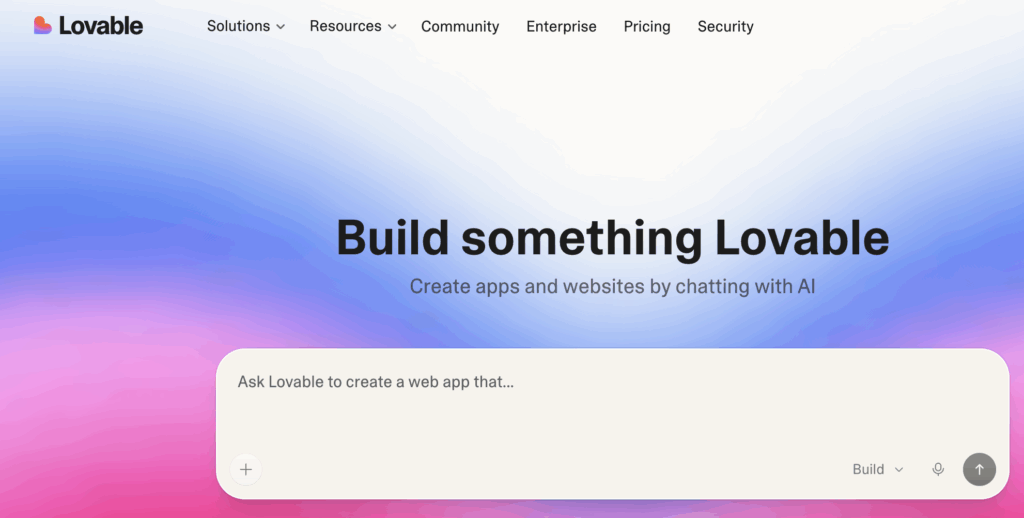
Lovable has become increasingly popular among startups seeking AI-first product creation without deep engineering overhead. The platform focuses on turning natural language prompts into polished web applications with clean UI generation and integrated deployment workflows. Compared to Replit, Lovable emphasizes product design and user experience more heavily, making it especially attractive for founders building customer-facing applications quickly. Many startups use Lovable for landing pages, SaaS dashboards, and internal business tools during early validation stages. Its visual-first workflow reduces the time between idea conception and product launch. For startups operating under aggressive timelines, this speed advantage can be highly valuable.
Target Audience
- Startup founders without large engineering teams
- Product-focused companies
- Design-oriented SaaS startups
- Rapid MVP development teams
Key Features
- AI-powered UI and app generation
- Fast deployment workflows
- Modern responsive design output
- Prompt-based development
- Built-in hosting and preview tools
- Strong focus on frontend experience
Pitfalls
- Backend flexibility can be limited
- Complex business logic may require manual coding later
- Startups may outgrow generated architectures
- Vendor dependency risks remain significant
Pricing
Lovable generally offers subscription-based pricing with tiered plans depending on AI usage, deployments, and collaboration features.
Firebase Studio
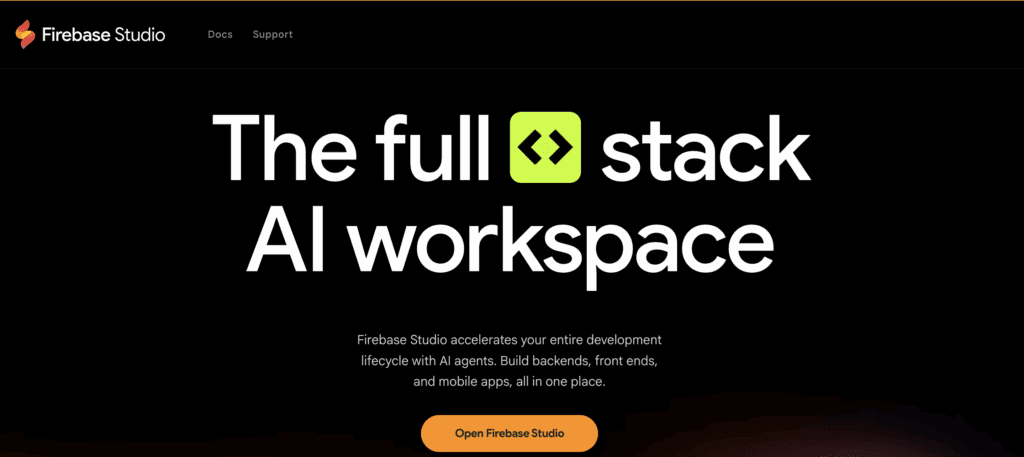
Firebase Studio represents Google’s growing push toward AI-assisted cloud-native development. Unlike pure browser playgrounds, Firebase Studio combines application generation with integrated backend services such as authentication, databases, analytics, and hosting. This makes it particularly useful for startups building mobile apps or SaaS products that need infrastructure from day one. Firebase Studio simplifies backend complexity while still leveraging Google Cloud scalability underneath. For founders without dedicated DevOps engineers, this can significantly reduce operational overhead during early growth stages. The platform also benefits from strong integration with the broader Google ecosystem.
Target Audience
- Mobile-first startups
- SaaS companies needing managed infrastructure
- Small engineering teams
- Founders prioritizing speed over infrastructure customization
Key Features
- Integrated backend services
- Authentication and database management
- Cloud hosting and scaling
- AI-assisted development workflows
- Analytics and monitoring integration
- Strong mobile application support
Pitfalls
- Potential vendor lock-in concerns
- Complex migrations away from Firebase services
- Costs can rise rapidly with user growth
- Limited infrastructure flexibility compared to custom cloud setups
Pricing
Firebase Studio generally follows usage-based pricing. Small startups can operate cheaply at first, but scaling applications should monitor database operations, storage, and bandwidth carefully.
StackBlitz
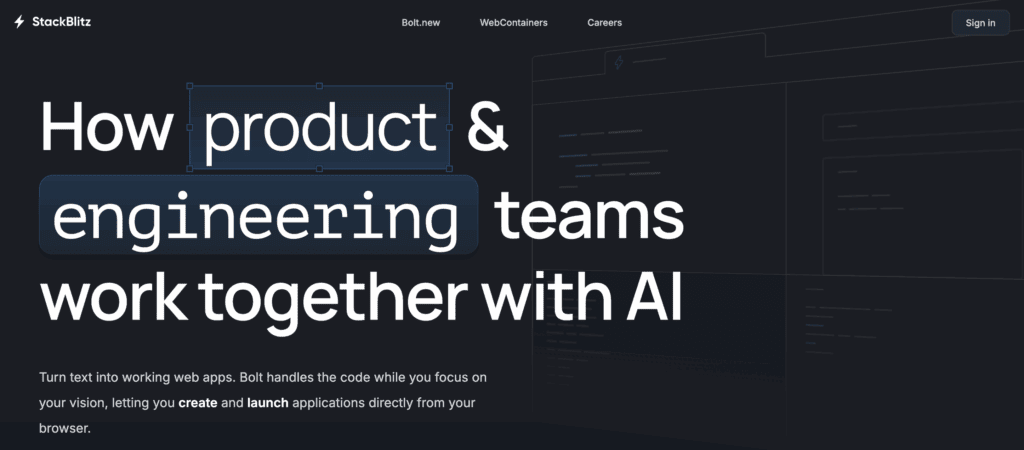
StackBlitz is another powerful browser-based development environment that has evolved far beyond simple frontend experimentation. The platform uses WebContainers technology to run Node.js environments directly in the browser, enabling surprisingly advanced development workflows without local setup. StackBlitz is especially attractive for startups prioritizing onboarding speed and collaborative development. Teams can instantly share live environments, reproduce bugs, and demonstrate features without requiring complex installations. Compared to Replit, StackBlitz focuses more heavily on modern web application workflows and frontend ecosystems. It provides a strong balance between accessibility and developer-oriented flexibility.
Target Audience
- Frontend-heavy startups
- Remote development teams
- Developer tooling companies
- Fast-moving SaaS engineering teams
Key Features
- Browser-native Node.js environments
- Instant collaboration and sharing
- Fast startup times
- Modern frontend framework support
- GitHub integration
- Lightweight onboarding workflows
Pitfalls
- Backend scalability remains more limited than traditional cloud environments
- Less suitable for highly complex enterprise architectures
- Advanced infrastructure customization may require external services
- Some workflows still work better in local environments
Pricing
StackBlitz offers free development tiers alongside premium plans designed for professional teams and collaborative workflows.
Comparing Replit Alternatives for Startup Growth
| Platform | Best For | Strength | Weakness |
| Flatlogic Generator | Startup SaaS and business apps | Production-ready full-stack generation | Requires customization for highly unique systems |
| Cursor | Production engineering teams | Powerful AI + full IDE workflows | Requires technical expertise |
| Bolt.new | Fast MVP generation | Rapid full-stack prototyping | Scaling challenges |
| GitHub Codespaces | Team scalability | Enterprise-ready workflows | Higher infrastructure costs |
| Lovable | Product-focused startups | Beautiful UI generation | Backend limitations |
| Firebase Studio | Cloud-native SaaS | Managed infrastructure | Vendor lock-in risks |
| StackBlitz | Frontend collaboration | Browser-native workflows | Less suitable for large backend systems |
How Startups Should Choose the Right Platform
Choosing a Replit alternative is not just about picking the tool with the best AI features or the cleanest interface. For startups, the real question is whether the platform can support the company beyond the MVP stage. A tool that works perfectly for a weekend prototype may become a bottleneck once the product gains users, investors, and engineering complexity.
The right platform depends on several critical factors:
Startup Stage
Early-stage startups usually prioritize speed, experimentation, and low operational overhead. At this stage, founders often need to validate ideas quickly, launch MVPs, and iterate based on user feedback.
Platforms like:
- Flatlogic
- Bolt.new
- Lovable
can dramatically reduce development time and help teams launch functional products in days instead of months.
However, once a startup reaches product-market fit, engineering priorities change. Scalability, maintainability, security, and team collaboration become much more important than raw development speed.
Technical Expertise of the Team
Non-technical founders often benefit from AI-first platforms that minimize infrastructure management and backend configuration. These tools help teams focus on validating business ideas instead of spending months building internal systems.
More technical startups may prefer platforms such as:
- Cursor
- GitHub
because they provide greater control over architecture, workflows, debugging, and deployment pipelines.
The more experienced the engineering team becomes, the more valuable flexibility and customization usually are.
Product Complexity
Simple SaaS dashboards and internal tools can often be built successfully using AI-generated architectures. But products with:
- complex business logic
- real-time systems
- microservices
- advanced integrations
- large-scale databases
- strict compliance requirements
typically require stronger backend flexibility and DevOps maturity.
Startups should evaluate whether the platform supports long-term architectural evolution instead of just initial code generation.
Scalability Requirements
Many browser-based development tools perform well under light workloads but become difficult to manage as infrastructure grows.
Before choosing a platform, startups should consider:
- Can the application scale under increased traffic?
- Does the platform support cloud-native deployment?
- Is there flexibility to migrate infrastructure later?
- How easy is monitoring and observability?
- Does the tool introduce vendor lock-in risks?
Ignoring these questions early can create expensive migration problems later.
Ownership and Maintainability
One of the most overlooked factors in AI-assisted development is code ownership. Startups should ensure they fully control the generated codebase and can continue development independently if needed.
Production-ready platforms should provide:
- clean code structure
- documentation
- standard frameworks
- deployment flexibility
- compatibility with modern DevOps workflows
This becomes especially important when startups begin hiring engineers and scaling teams.
Cost Efficiency Over Time
Some tools appear inexpensive during the MVP phase but become costly as usage scales. AI request limits, cloud resource pricing, storage costs, and collaboration features can significantly impact long-term budgets.
Founders should evaluate not only:
- initial pricing
- free plans
- AI generation quotas
but also the total operational cost of maintaining the product as the startup grows.
Final Recommendation
Ultimately, the best Replit alternative is not the one that helps you ship a demo fastest, it’s the one that can support real product growth afterward. As startups scale, maintainable architecture, deployment flexibility, and engineering consistency become far more important than simple browser-based convenience.
Platforms like Flatlogic reflect this shift by combining AI-driven development speed with production-ready full-stack architecture, helping startups move from MVP experimentation to scalable software products without rebuilding everything from scratch.
Conclusion
Replit helped popularize fast, accessible, browser-based development for a new generation of founders. But as startups grow beyond prototypes, the requirements change quickly. Scalability, maintainability, collaboration, security, and deployment flexibility become just as important as development speed.
Today’s ecosystem offers far more specialized alternatives, from AI-native coding environments to full-stack application generators and cloud-based development platforms. The right choice depends on your startup’s stage, technical expertise, and long-term product goals.
For many teams, the most sustainable path is choosing platforms that accelerate MVP development without sacrificing production readiness later. Solutions like Flatlogic demonstrate how startups can combine AI-assisted development with structured, scalable architectures that continue supporting the product as the business grows.