Healthcare app builder for secure patient and clinic workflows
Describe the healthcare product you need. Generate a real web app with patient intake, secure portals, clinic case workflows, RBAC, audit logs, HIPAA-aware controls, reporting, integrations, and code your team can own.
Prompt ready: build patient intake, secure portals, clinical case workflows, RBAC, audit logs, reports, and compliance-sensitive data handling.
Prompt example
Build a healthcare app with patient intake, secure patient and staff portals, clinic case records, role-based access, audit logs, document uploads, queue management, appointment requests, physician reports, notifications, analytics, and HIPAA-aware data handling.
Patient intake
HIPAA-aware controls
RBAC and audit logs
OpenPatho proof
Clinical operations console
Build the protected workflow behind the patient experience
Healthcare apps rarely stop at a public form. The useful MVP connects intake, role-based staff work, case status, protected uploads, audit history, reports, and operational dashboards so the product can run in a real clinic or lab.
Verified intake
Case HP-1042
Images uploaded, physician review assigned, audit trail active.
Triage queue
8 pending
Front desk, nurse, lab, and physician roles see only assigned fields.
Audit log
09:22 Report draft opened by physician role
09:28 Secure file added to case record
09:35 Patient status changed to review
Report readiness
74%
What you can build
Healthcare software shaped around access, cases, and compliance
Internal demand points to secure portals, role-based access, audit logging, dashboards, APIs, and queue workflows as the core first-release set.
Patient intake and portals
Collect patient details, consent states, forms, uploads, appointment requests, and secure patient-facing status updates.
Clinical case management
Track patient cases, assignments, review status, notes, report drafts, escalations, and completion history.
RBAC and audit trails
Separate patient, clinic staff, physician, lab, admin, and auditor access with permission-aware history for sensitive actions.
HIPAA-aware data handling
Design protected records, document storage, secure authentication, logging, access review, and deployment choices around compliance needs.
Queues and realtime updates
Support front-desk verification, triage queues, case status changes, internal alerts, and PHI-safe public displays when needed.
AI, analytics, and reporting
Add AI-assisted review, operational dashboards, exportable reports, and integrations with storage, SSO, APIs, or messaging tools.
OpenPatho case study
Healthcare proof from AI-assisted histopathology
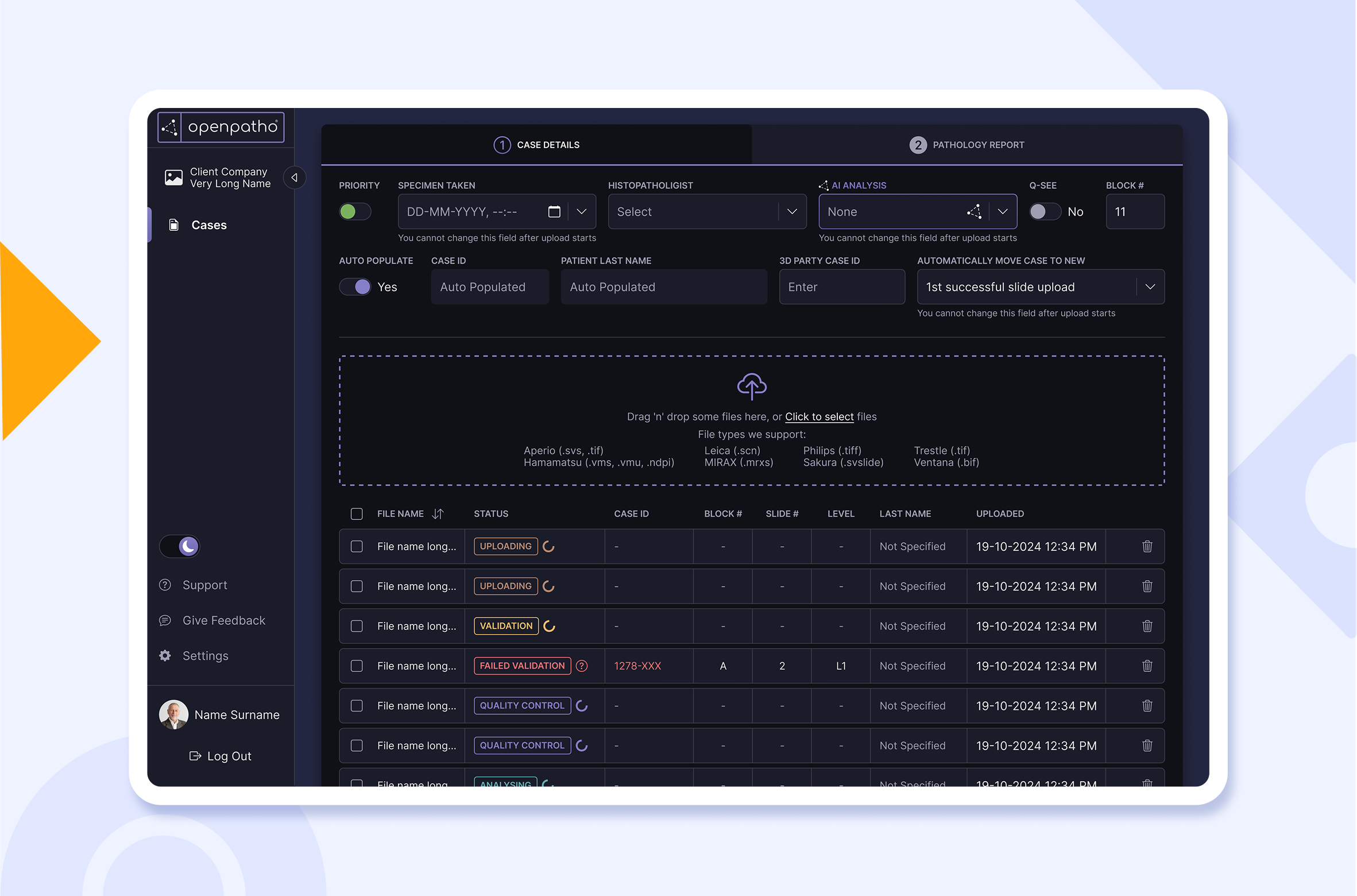
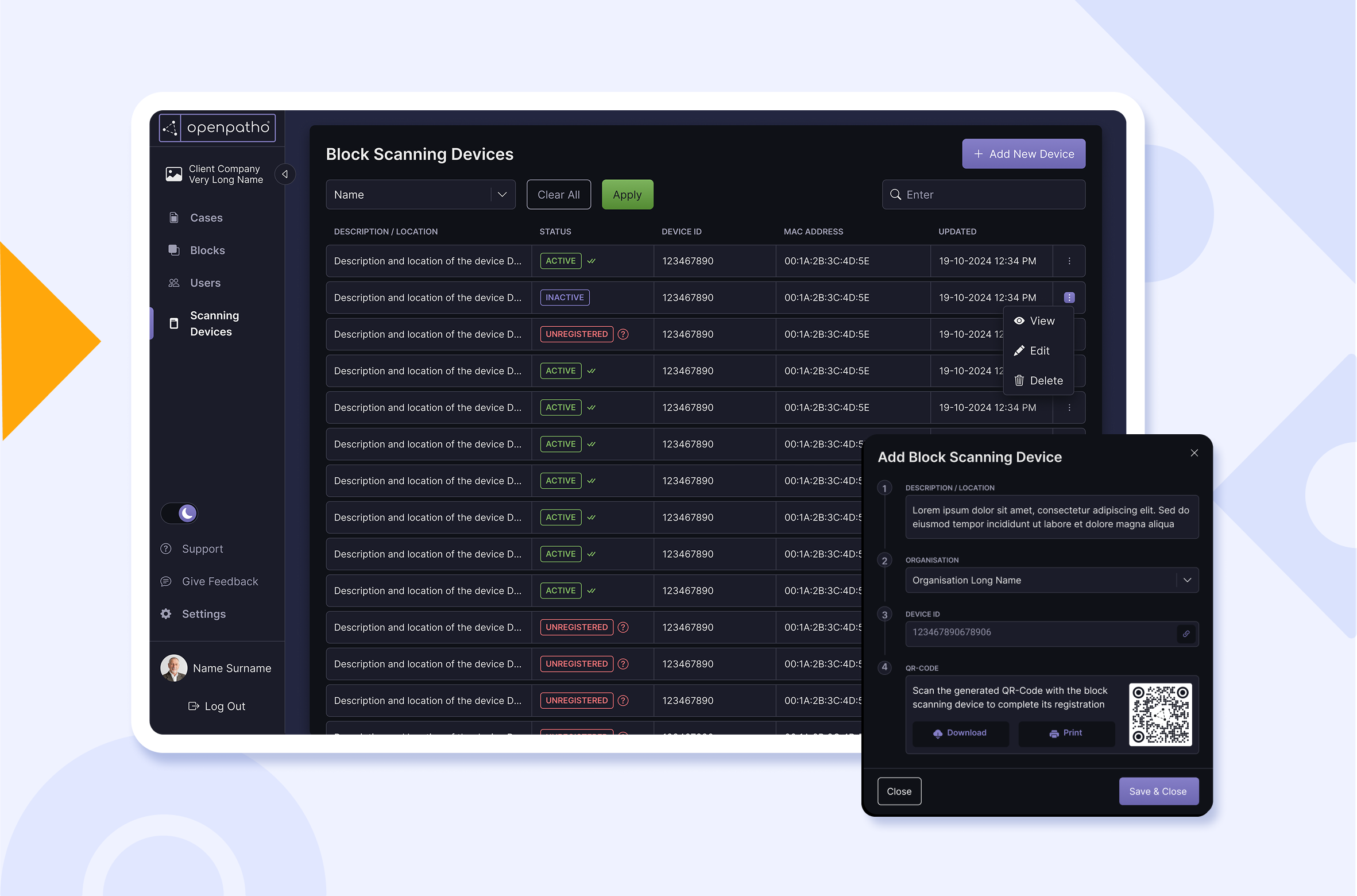
Flatlogic helped OpenPatho build a secure healthcare web app for medical clinics and laboratory staff to manage patient cases, upload histopathology sample images, process AI-assisted analysis, and generate physician-ready reports.
That is the same type of regulated product surface this page is built for: sensitive records, large files, role-specific workflows, AI support, reporting, deployment control, and full source code ownership.
Read the OpenPatho case studyBuild workflow
From protected workflow map to deployable healthcare app
Define the healthcare workflow
Start with the patient, clinic, lab, physician, or admin roles and the protected records each role can create or review.
Generate the secure app base
Create the first database models, portal views, RBAC rules, uploads, audit logs, dashboards, APIs, and deployment scaffolding.
Tune compliance-sensitive flows
Refine access boundaries, reporting, document handling, notifications, hosting choices, logs, retention, and integration points.
Launch with code ownership
Deploy to controlled infrastructure, review the source code, and keep extending healthcare workflows as product requirements mature.
Compliance-sensitive MVP scope
- Role-based access for patients, staff, physicians, labs, admins, and auditors
- Audit logs for record changes, uploads, report access, and status updates
- Secure authentication, storage, deployment controls, and reviewable source code
- Documentation handoff for compliance review, BAAs, retention, and hosting policy decisions
Questions
Healthcare app builder FAQ
The strongest healthcare MVP starts by defining protected data, user roles, workflow state, and compliance responsibilities before adding polish.
Yes. Flatlogic can build healthcare apps with HIPAA-aware architecture patterns such as RBAC, secure authentication, audit logs, protected uploads, access review, data protection, and controlled deployment choices. Final compliance still depends on configuration, hosting, policies, BAAs, and legal review.
Appointment scheduling focuses on availability, booking rules, reminders, and calendars. A healthcare app usually combines scheduling with patient intake, secure portals, clinical records, triage, medical files, audit logs, reports, and compliance-sensitive access controls.
Yes. Patient portals, clinic staff dashboards, physician views, admin panels, document uploads, status tracking, and notifications are practical first-release modules for healthcare products.
OpenPatho is the closest proof point: Flatlogic helped deliver a secure AI-assisted histopathology platform for clinics and pathology professionals, including case management, large image uploads, AI analysis, report generation, and full source code ownership.
Yes. Common healthcare candidates include PostgreSQL, SSO, AWS S3 or compatible storage, REST APIs, email or SMS notifications, realtime updates, analytics, and AI-assisted workflows when the clinical process calls for them.
Start the healthcare MVP
Describe the roles, records, and compliance controls first
Define the patient intake flow, clinical records, staff permissions, audit events, file handling, reports, integrations, and deployment needs that make the healthcare app viable.