


TL;DR
- Ship fast with agentic builders, but keep code, data, and infra ownership to avoid lock-in.
- Pick tools by need: AppWizzy (B2B MVP, exportable), Lovable (rapid MVPs), Bolt (AI IDE), Replit (all-in-one).
- Start with a narrow niche; design your domain model; add analytics and billing from day one.
- Iterate on workflows, not features; decide to stay or migrate based on cost, compliance, and velocity.
- Flatlogic can help with AppWizzy and engineers to design, generate, and harden a production SaaS.
Fact Box
- Global SaaS market is ~$399B in 2024, projected to exceed $800B by 2030 at ~12% annual growth.
- Broader SaaS ecosystem is projected to reach $1.25T by 2034, with strong vertical and AI-native growth.
- Over 70% of builders worry about security vulnerabilities in vibe-coding platforms.
- Replit projects about $1B in revenue by 2026, driven by AI coding agents.
- AppWizzy credits: 1 credit = $1; hosting starts at about 0.25 credits/day.
If you want to launch a SaaS in 2026 without becoming yet another AI toy that never found a market, this is the one guide you should read to the end.
If you’re here, you’re probably asking yourself variations of the same questions:
- Which AI builder should I actually use to build my SaaS?
- How far can I get with tools like AppWizzy, Lovable, Bolt, or Replit before I need a real dev team?
- How do I avoid becoming just another failed AI wrapper burning through my savings?
- Or, more bluntly: What’s the actual playbook for turning an idea into a serious SaaS product in this new AI-first world?
As Marc Andreessen famously put it, “The only thing that matters is getting to product/market fit.”
The uncomfortable part: the odds are still brutal. Analyses of SaaS startups estimate that roughly 90% fail within the first few years, most often due to a lack of product-market fit, weak go-to-market strategies, cash flow issues, and mounting technical debt, rather than because the founders couldn’t ship features. At the same time, AI builders make it trivial to spin up yet another dashboard or CRM in an afternoon. The result is a crowded market where shipping software is easy, but building a durable SaaS business is harder than ever.
In this article, you’ll see how to build a SaaS in 2026 by combining agentic AI builders with a disciplined SaaS strategy: understanding the market, picking the right tool for your stage, avoiding the common traps of vibe coding, and knowing when to bring in experienced partners. By the time you reach the end, you’ll not only understand what each tool can do, but you’ll also know how to orchestrate them into a real, revenue-generating product, and where a firm like Flatlogic fits into that picture.
SaaS Landscape in 2026: Why This Is Not 2015 Anymore
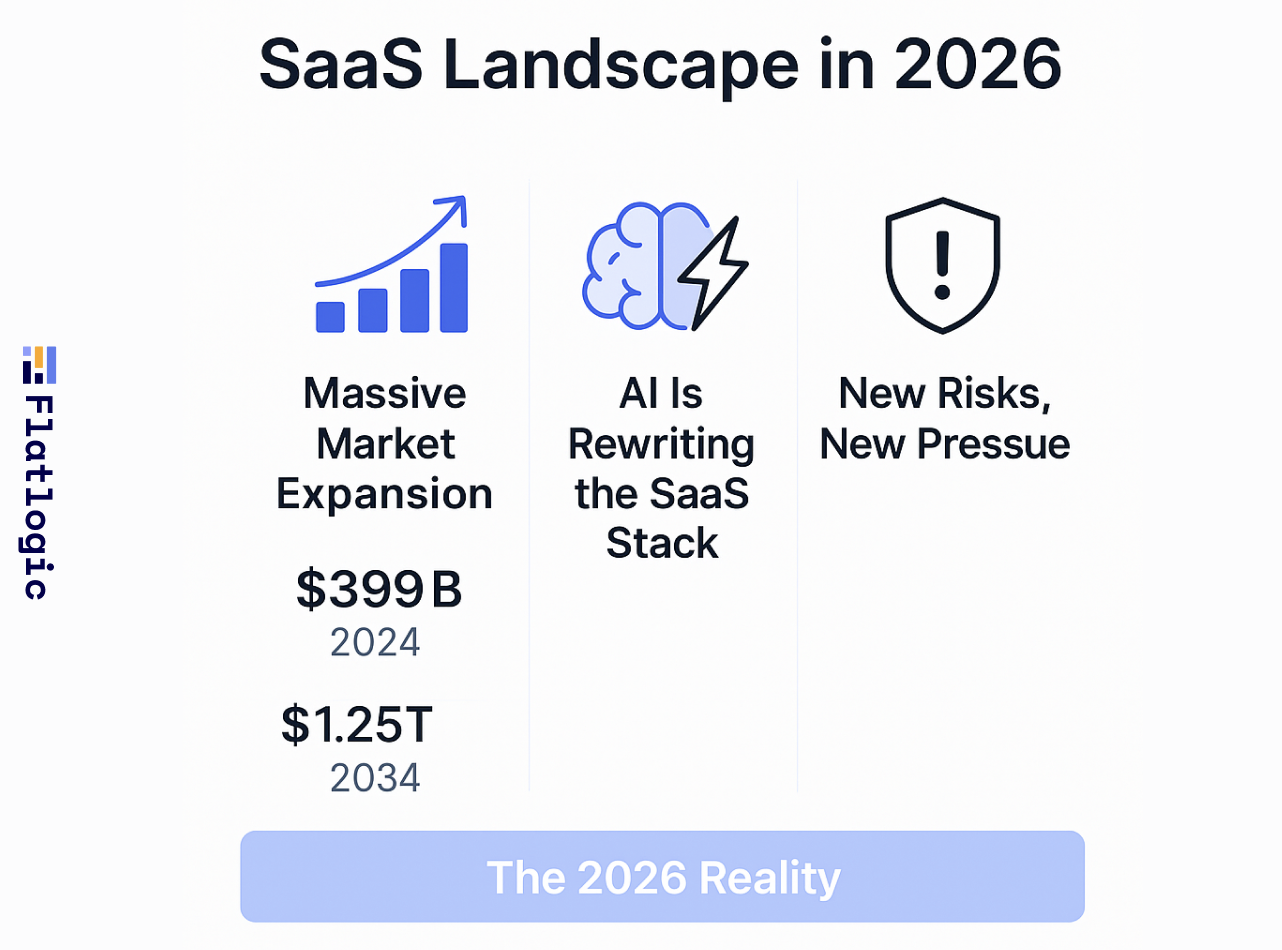
Let’s start with the environment you’re walking into.
- The global SaaS market is already massive and still growing fast. One recent forecast estimates the market at about $399B in 2024, heading toward over $800B by 2030, with ~12% annual growth driven by cloud adoption and AI.
- Another analysis projects the broader SaaS ecosystem hitting $1.25 trillion by 2034, with especially strong growth in vertical and AI-native SaaS.

On top of that, AI has changed the game:
- Investors like Bessemer are now talking about a full Cloud AI universe and publishing dedicated State of AI benchmarks for developer tools, horizontal AI infrastructure, and application-layer SaaS.
- Platforms such as Replit, which started as a browser IDE, have raised hundreds of millions and are projecting $1B in revenue by 2026, driven largely by AI coding agents that replace or augment early-stage engineering teams.
- StackBlitz’s Bolt.new, Lovable, and others are repositioning themselves from simple AI coders into end‑to‑end platforms that combine code generation with hosting, auth, databases, payments, and domains to keep you inside their ecosystem.
- Big clouds are reacting: AWS launched Kiro, a structured agentic IDE designed to fix the chaos of pure vibe coding and make AI‑built prototypes production‑grade.
At the same time, founders are nervous. Surveys of builders show over 70% worry about security vulnerabilities in vibe‑coding platforms, while many still perceive more traditional visual or low-code approaches as safer.
So 2026 looks like this:
- Building a v1 SaaS has never been faster or cheaper.
- The market has never been more saturated with mediocre products.
- The bar for security, reliability, and governance is higher than ever, especially in B2B.
The job isn’t to use AI to generate code. The job is to turn AI‑accelerated code into a defensible SaaS business.
Terminology & Definitions
Before we go deeper, let’s align on vocabulary.
SaaS (Software as a Service)
A software product delivered over the internet, typically via subscription. Customers don’t install binaries; they access your product via browser or API, and you own the hosting, updates, and security.
MRR / ARR
- MRR (Monthly Recurring Revenue): Your normalized subscription revenue per month.
- ARR (Annual Recurring Revenue): MRR × 12.
Most B2B SaaS investors anchor everything, valuation, health, risk, around ARR.
Product-Market Fit (PMF)
The moment when you’ve found a repeatable match between a specific segment, a specific painful problem, and a solution they are willing to pay for and keep using. Andreessen’s line, The only thing that matters is getting to product/market fit, isn’t hyperbole; it’s a survival rule.
Vibe Coding
A term popularized by Replit and others: building software primarily via natural‑language prompts to an AI agent, instead of writing most of the code yourself. You describe what you want; an AI agent plans, writes, tests, and refines the app.
Agentic App Builder
Borrowing from Flatlogic’s own research and writings: an AI system that can plan, generate, test, and deploy entire applications autonomously, not just suggest snippets. It uses structured representations (schemas, diagrams) plus deterministic templates to create production‑grade apps with auth, roles, CRUD, dashboards, and CI/CD baked in.
Code Ownership vs. Platform Lock‑In
- Code ownership: You can export the full repo, host it anywhere, and modify it with any tools you like.
- Lock‑in: Your app only really exists inside the provider’s environment; export is fragile, incomplete, or impossible.
In 2026, when AI builders come and go quickly, code ownership is strategic, not a detail.
The Core Idea: Orchestrate AI Builders, Don’t Worship Them
Here’s the main idea I want you to walk away with:
Use agentic builders to compress time-to-market, but design your SaaS so that you keep control of the architecture, data, and economics.
That means:
- Let tools like AppWizzy, Lovable, Bolt, or Replit handle scaffolding, CRUD, dashboards, and internal tools.
- Reserve your human attention for customer insight, pricing, onboarding, and the workflows that are actually defensible.
- From day one, make decisions that avoid becoming hostage to a particular vendor’s runtime or pricing model.
Practically, that looks like:
- Design your domain model and workflows clearly (what entities exist, what roles, what core actions).
- Use an agentic builder to turn that model into a working app (auth, database, boilerplate UI).
- Test with real users immediately, not with other developers.
- Once the idea is validated, either:
- double down on the same platform (if it gives you code export and sane pricing), or
- migrate the generated code into your own repo and infrastructure, possibly with help from a specialist team (this is where Flatlogic often comes in).
Now let’s look at the four platforms you mentioned through that lens.
Top Agentic AI Builders to Build SaaS in 2026
If you’re serious about launching a SaaS in 2026, you need more than a code generator. You need an agent that can plan, build, refactor, and deploy your product while you focus on customers and strategy. This section cuts through the noise and shows you the AI platforms that actually deliver: the ones fast enough for prototypes, structured enough for real B2B apps, and flexible enough to grow with you. Let’s break down the tools shaping the next generation of SaaS builders.
AppWizzy
AppWizzy is a professional vibe-coding platform focused on building scalable, production‑ready web apps and websites by chatting with an AI assistant. Unlike many AI builders that run your app in a toy sandbox, AppWizzy provisions a real development VM in the cloud with your chosen stack (PHP, Node/Next.js, Python, Postgres, MySQL, etc.), so you can build complex backends and integrations. It uses a hybrid agentic approach: a large language model extracts structured specifications from your prompts, and a deterministic generator turns them into complete applications with auth, roles, CRUD, dashboards, and CI/CD pipelines. You describe what you want to build, choose a template (e.g., SaaS starter, CRM, admin panel, portal), and then deploy with one click; from there, you can edit the project like any normal repo, push to GitHub, and extend it in VS Code. The platform is built by Flatlogic, a company with a long history in SaaS templates and generators, and is very explicit about code ownership and export. You can download the full stack and move it elsewhere when you’re ready.
Target audience
Founders and teams who want to go from idea to production‑grade MVP in days, without giving up control of their stack. Especially strong for B2B SaaS, internal tools, and data‑heavy systems where you care about real databases, back‑office workflows, and long‑term maintainability.
Key features
- Real dev VM with your preferred stack (Next.js/Node/Postgres, PHP/LAMP, etc.).
- Agentic builder: AI + deterministic template engine for full apps (auth, roles, CRUD, dashboards).
- GitHub integration, versioning, and AI that edits your repo(accept/revert/iterate on edits).
- Template marketplace for SaaS, CRM, admin panels, portals, e‑commerce, etc.
- Transparent economics: credits for AI calls, daily hosting, and template licenses; 1 credit = $1.
Pitfalls
- It is not a pure no‑code toy, you still benefit from basic technical understanding to get the most out of it.
- Credit‑based thinking is unfamiliar to some founders; if you don’t watch usage, you can accidentally overspend on AI experimentation.
- As with any AI builder, you still need a real product process. AppWizzy can generate a CRM in minutes, but it can’t invent your niche or your distribution.
Pricing
- Free: $0/month, 5 credits per month, up to 3 public apps, dev environment, AI‑powered generation.
- Basic: $20/month with 25 credits (or $50/month with 60 credits), unlimited apps, private apps, dev + stable environments, collaborators, paid templates.
- Enterprise: Custom credits, dedicated hosting, custom features, and priority support.
- Hosting is billed daily from about 0.25 credits/day for a basic VM; template licenses are purchased separately with credits.
Lovable
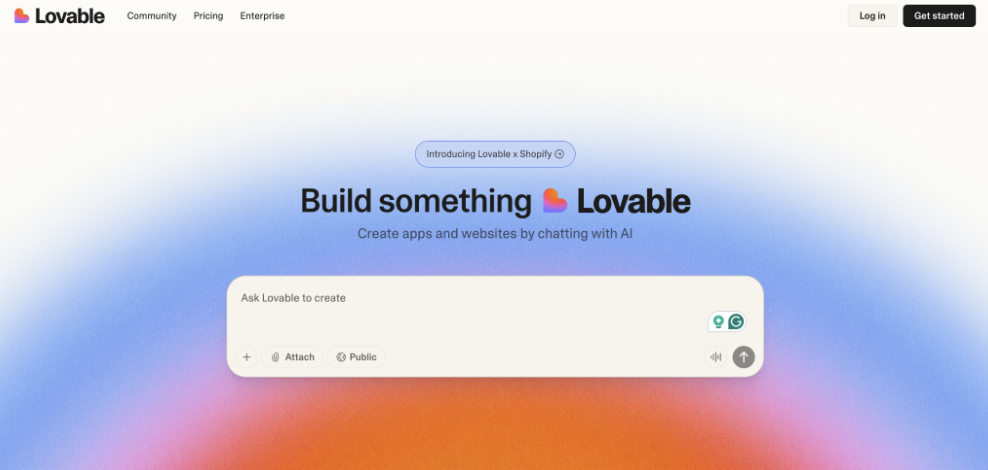
Lovable is a prompt‑driven AI app builder that positions itself as an AI engineer for building apps and websites by chatting. You describe the product you want, typically Next.js + Supabase or similar stacks, and Lovable generates a working app that you can refine conversationally. It’s very community‑driven, with a strong ecosystem of templates, examples, and the community apps you can remix. The platform is optimized for fast prototyping and internal tools as much as for consumer and B2B web apps. Lovable also abstracts away a lot of the pain of integrating AI features into your own app by offering direct access to models like Gemini and GPT without you managing API keys yourself.
Target audience.
Solo founders, product managers, designers, and marketers who want to prototype and iterate on apps quickly without a heavy engineering setup. Especially useful for internal tools, lightweight SaaS experiments, marketing tools, and early MVPs where speed matters more than deep customization.
Key features
- Chat‑based project creation and refinement: describe your app, then iterate via natural language.
- Templates for internal tools, websites, B2B/B2C apps, and prototypes.
- Built‑in support for adding AI features (LLM calls) without managing separate AI provider accounts.
- Collaboration and user roles for teams building together in real time.
- Hosting and lovable.app domains, with support for custom domains on paid tiers.
Pitfalls
- It’s more closed than a full dev VM approach: while you can work with real stacks, there’s still a degree of platform dependence and less emphasis on deterministic generation.
- For complex, highly customized enterprise backends, you may hit platform limits and need to move to a more flexible environment.
- Credit‑based AI and cloud usage can be tricky to predict if you don’t track how much prompting and hosting you actually consume.
Pricing
- Free: Starter tier (details not fully listed on the snippet, but includes core building and limited credits).
- Pro: $25/month, shared across unlimited users, includes 100 monthly credits plus daily bonus credits, custom domains, unlimited lovable.app domains, and removal of Lovable branding.
- Business: $50/month, again shared across unlimited users, adds internal publishing, SSO, personal projects, and the ability to opt out of data training.
- Enterprise: Custom pricing with dedicated support, onboarding, custom connections, and design systems.
- Student discounts offer up to 50% off Pro plans.
Bolt.new
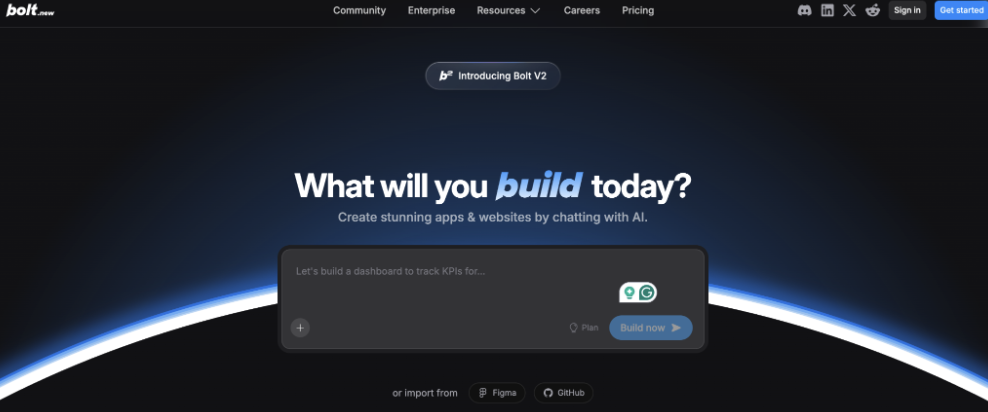
Bolt.new (by StackBlitz) is a browser-based AI coding environment that turns natural‑language prompts into full‑stack React apps running in your browser. You describe what you want, and Bolt generates code, installs dependencies, runs tests, and lets you inspect and refine the result in real time. The platform leans heavily into live development, your project is always running in an instant dev environment powered by StackBlitz’s WebContainers technology. Over the last year, Bolt has evolved from a pure AI code generator into an end‑to‑end platform with hosting, domains, databases, serverless functions, auth, SEO tooling, and payments bundled into its subscription tiers. It’s particularly attractive if you love React/Tailwind/Node and want to move fast with a visual, AI‑assisted dev setup.
Target audience.
Developers and technical founders who are comfortable with code but want an AI‑boosted environment to skip scaffolding, wiring, and repetitive work. Also appealing for smaller teams building marketing sites, SaaS dashboards, or prototypes that may later be exported to a different setup.
Key features
- Natural‑language prompts for full‑stack app generation (front end + backend).
- Real-time browser IDE with instant preview and live code editing.
- Modern default stack (React, Tailwind, Node/Next.js) plus integration with external infra partners like Netlify and Supabase.
- Hosted deployments, domains, serverless functions, database, auth, SEO, and Stripe-powered payments wrapped into subscription plans.
- Token‑based AI usage, with different tiers defining how many tokens you can burn per month.
Pitfalls
- Token-based pricing can get expensive at scale; once you’re doing heavy AI generation or complex apps, you can blow through tokens quickly.
- Historically, some flows restricted direct code editing (you’d prompt instead of editing files), which can frustrate experienced developers, though this is evolving.
- As with other hosted builders, you’re tied into Bolt’s runtime; if you need unusual infra or strict compliance, you may eventually need to export and migrate.
Pricing
- Free: $0, limited tokens, good for experimentation and small demos.
- Pro: Starts around $25/month for roughly 10M tokens; higher Pro tiers go up in token capacity and price.
- Teams: Around $30/month per member for team plans with more tokens and collaboration features.
- Enterprise: Custom pricing, with enterprise-grade infra and support.
(Details change frequently. Always check Bolt’s official pricing page for the exact current numbers.)
Replit
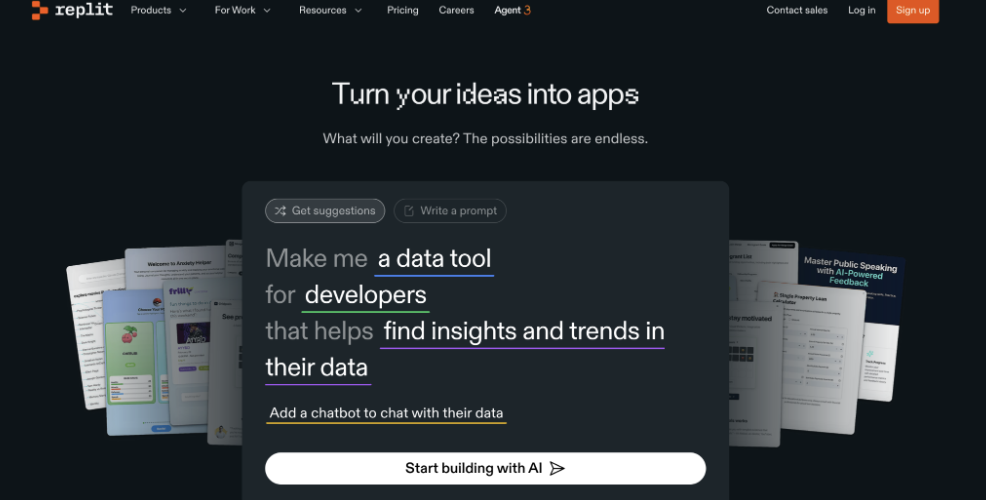
Replit started life as a browser-based IDE, but in 2024-2025, it evolved into one of the most advanced autonomous coding platforms in the market. Replit AI and Agent 3 let you describe an app in natural language; the agent then plans, generates, tests, fixes, and deploys it, sometimes even spawning other agents to handle workflows. Replit integrates hosting, databases, and auth directly into the experience, so you can go from ideato public URL in a single environment. It has also doubled down on vibe coding as a philosophy: making software creation accessible to non‑programmers while still serving professional developers and enterprises. With large funding rounds, big‑name customers, and a projection of $1B in revenue by 2026, Replit is positioning itself as a default place to build AI‑first apps.
Target audience.
Everyone from students and indie hackers to teams and enterprises that want an all‑in‑one coding + hosting + AI environment. Particularly good if you want fast iteration, built‑in collaboration, and are comfortable with pay‑as‑you‑go usage credits.
Key features.
- Replit Agent: autonomous app setup, feature addition, testing, and self‑debugging via AI.
- Integrated hosting, database, and authentication, with easy deployment and private deployments for teams.
- Visual editor and import from Figma for front‑end heavy apps.
- Team features: SSO, SOC 2 compliance, role‑based permissions, centralized billing, etc.
- Effort‑based Agent pricing: you pay proportionally to the work the agent does, rather than flat per‑checkpoint fees.
Pitfalls.
- Credit‑style pricing can be hard to predict; it’s easy to underestimate how much agent work your project will need.
- For strict enterprise environments that require custom infra or on‑prem, Replit’s hosted nature can be a constraint.
- As with all vibe‑coding, if you don’t maintain structure and tests, you can accumulate hidden complexity inside the project.
Pricing
- Starter: Free. Public projects only, limited dev time, and basic AI access, good for learning and small prototypes.
Core: Around $25/month ($20/month if billed annually), including full Agent access, private and public apps, hosting, and about $25 in usage credits each month. - Teams: Roughly $40/user/month ($35 annually) with more credits, 50 viewer seats, private deployments, and team governance.
- Enterprise: Custom pricing for large organizations needing stronger compliance and security guarantees.
How to Actually Build a SaaS in 2026 (With These Tools)

Tools are just leverage. You still need a process.
Here’s a practical end‑to‑end playbook that uses these platforms intelligently.
Step 1: Nail a narrow, painful problem
Forget AI CRM for everyone. Talk to real customers in a tight niche, HR for logistics companies, finance teams in mid‑market SaaS, clinic operations, etc.
- Map their current workflow.
- Identify the one or two jobs that are slow, error‑prone, or visibility‑poor.
- Write a one‑sentence product statement:
We help [segment] do [job] without [pain], in [time].
No AI builder will fix a fuzzy value proposition.
Step 2: Design your domain model and workflows
Before you open AppWizzy or Replit, define:
- Entities (e.g., Company, User, Contract, Invoice)
- Relationships (e.g, one company has many contracts)
- Roles and permissions
- 3-5 critical workflows (e.g, Create new contract, Approve invoice, Export monthly report)
Agentic builders like AppWizzy literally want this clarity; they turn your structure into schemas and then into code.
Step 3: Choose the right builder for your first version
A rough rule of thumb:
- AppWizzy, if you want a production‑grade B2B SaaS with real backend logic, a full data model, and a clear path to code export and self‑hosting later.
- Lovable if you’re doing rapid MVPs, marketing tools, or early experiments where collaboration between non‑technical teammates matters a lot.
- Bolt.new if you or your team are comfortable with React/Node and want an AI‑turbocharged dev environment that still feels like coding.
- Replit if you want an all‑in‑one IDE + agent + hosting and are okay running on their infra with usage‑based pricing.
You’re not marrying any of them forever. Use whichever gets you to a usable prototype in 1-2 weeks, not 1-2 quarters.
Step 4: Build the MVP and wire in analytics & billing immediately
Whichever builder you pick:
- Use AI to generate the core flows and screens.
- Add basic analytics from day one (Mixpanel, PostHog, or even a simple event log).
- Integrate billing early (Stripe, Paddle, or B2B invoicing).
- Get 5-10 real users using the product and watching metrics:
- activation (how fast they reach a value)
- retention
- willingness to pay
If your builder makes it hard to add analytics, auth, or billing, that’s a red flag for long‑term viability.
Step 5: Iterate on workflows, not features
When customers give feedback, translate it into workflow changes, not random feature requests:
- I forgot to renew contracts→ add nudges, timelines, and dashboards, not just another filter.
- My CFO doesn’t trust the numbers.→ add audit logs, exportable reports, and permissions.
Use the AI builder to quickly restructure flows and screens, but keep your domain model stable. That’s what gives you a durable product instead of a pile of demos.
Step 6: Decide on your long‑term architecture
Once you see real traction (paying users, strong retention), you have a choice:
- Stay on the builder if:
- You have code export and clear ownership (e.g., AppWizzy).
- The pricing model comfortably fits your unit economics.
- You’re still shipping fast and don’t hit platform ceilings.
- Migrate to your own infra if:
- You need strict compliance, performance, or special infra.
- You’re starting to hit cost ceilings on tokens/credits.
- You want to mix several infrastructures or vendors.
This is the moment where many founders regret starting on closed systems. If you know that migration is likely, opt for platforms that prioritize code export and open stacks from day one.
Step 7: Build your moat around data, workflows, and distribution
Your defensibility comes from:
- Owning unique datasets (from your customers’ workflows).
- Embedding into core workflows (becoming the system of record or the main cockpit).
- Nailing distribution, channels, partnerships, and communities, not just winning Product Hunt once.
The AI builder accelerates your learning loop: idea → product change → usage & revenue data. The moat comes from how many loops you run and how well you learn from them.
Conclusion
If you strip away all the buzzwords, this guide boils down to a few hard truths about building SaaS in 2026. First, shipping an app is trivial; finding real product-market fit is not. AI builders like AppWizzy, Lovable, Bolt, and Replit make it easy to spin up dashboards and CRMs, but they don’t choose your niche, define your customer, or design a business model that survives contact with reality. Second, agentic AI builders are leverage, not magic: use them to generate scaffolding, CRUD, and dashboards fast, while you focus your human brainpower on workflows, pricing, onboarding, and distribution. Third, ownership and architecture matter. Choose tools and stacks that give you control over your code, data, and infra so you can evolve from “AI demo” to durable SaaS without painful rewrites. Finally, the winners will be the teams that iterate fastest on real usage, wiring analytics and billing from day one, and building a moat around customer workflows and data, not around “we used AI”.
If you’re serious about doing this properly, not just generating another prototype, Flatlogic can sit on your side of the table: using AppWizzy and our AI + engineering team to design the right architecture, generate a production-ready foundation, and then extend it with the custom features, integrations, and hardening you need so your SaaS can actually survive growth instead of collapsing under it.